
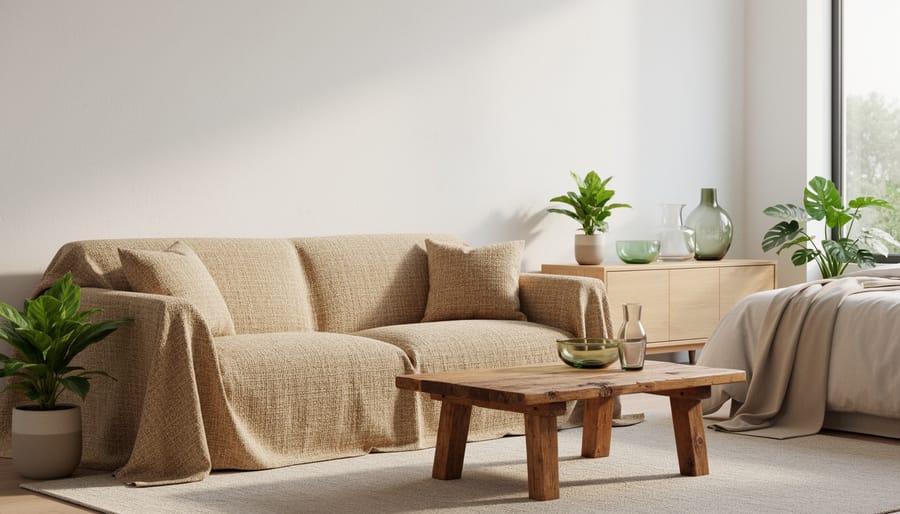
Environmentally friendly home decor reduces indoor air pollution, minimizes landfill waste, and lowers your carbon footprint through eight core product categories: natural fiber textiles, reclaimed wood furniture, low-VOC paints and finishes, recycled glass accessories, organic bedding, sustainably harvested bamboo pieces, secondhand vintage items, and plant-based decorative elements. Each category addresses specific environmental concerns while delivering aesthetic appeal that matches contemporary design trends.
The environmental impact of conventional home decor extends beyond manufacturing emissions. Traditional furniture releases formaldehyde and other volatile organic compounds for years after purchase, particularly pieces made with particleboard or synthetic foams. Textile production accounts for roughly 10% of global carbon emissions, while petroleum-based synthetic rugs and curtains shed microplastics into household dust. Most mass-produced decor items end up in landfills within five to seven years, creating waste that persists for decades or centuries.
Choosing sustainable alternatives directly improves indoor air quality and supports circular economy practices. A 2025 study from the Environmental Working Group found that homes furnished primarily with natural materials showed 60% lower concentrations of airborne toxins compared to conventionally decorated spaces. Reclaimed and secondhand pieces divert usable materials from waste streams, while products certified by third-party organizations like GREENGUARD, FSC, or OEKO-TEX meet verifiable environmental and health standards.
This guide breaks down material science, certification standards, and sourcing strategies for each decor category, helping you make informed purchasing decisions that align environmental responsibility with practical budget considerations and design preferences.
How We Selected These Eco-Friendly Decor Options
We evaluated each decor option against five core criteria to ensure it delivers genuine environmental and health benefits, not just greenwashing. These benchmarks reflect the priorities of homeowners who want to reduce their ecological footprint while creating comfortable, durable interiors.
Our selection criteria include:
- Renewable or recycled source materials that reduce extraction and waste
- Low or zero VOC emissions to protect indoor air quality
- Proven durability and longevity to minimize replacement cycles
- Supply chain transparency through certifications or manufacturer disclosure
- Real-world availability through mainstream retailers, not just specialty boutiques
For environmental impact, we considered the full lifecycle: how raw materials are harvested or reclaimed, energy use during manufacturing, transportation footprints, and end-of-life disposal or recyclability. A bamboo floor scores higher than exotic hardwood because bamboo regenerates in three to five years compared to decades for traditional timber.
Indoor air quality weighed heavily in our assessment. Products that off-gas formaldehyde, benzene, or other toxins were excluded, even if they met other sustainability benchmarks. We prioritized materials with third-party testing documentation.
Accessibility matters. Each option had to be purchasable by typical homeowners in 2026 without requiring specialized contractors or prohibitive budgets, making sustainable choices practical rather than aspirational.
1. Reclaimed Wood Furniture
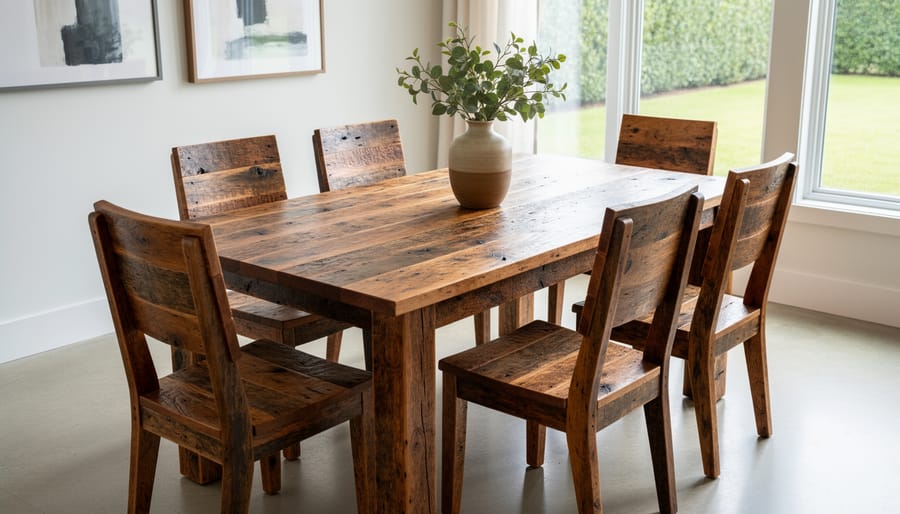
Reclaimed wood furniture transforms salvaged timber from old barns, factories, and demolished structures into functional pieces that carry both history and sustainability credentials. By choosing reclaimed over new wood, you directly reduce landfill waste while cutting the environmental impact of logging virgin forests. Each reclaimed piece preserves trees that would otherwise be harvested and gives discarded materials a second life rather than releasing decomposition methane in landfills.
The character of reclaimed wood sets it apart from factory-milled alternatives. Weathered grain patterns, nail holes, saw marks, and natural color variations tell a story that new lumber cannot replicate. A dining table crafted from 100-year-old barn beams becomes a conversation piece, while reclaimed wood shelving adds warmth and texture to modern minimalist spaces. Accent walls using salvaged planks create focal points that blend rustic charm with contemporary design.
Real-world applications extend across your home. Reclaimed wood works beautifully for headboards, coffee tables, kitchen islands, and built-in cabinetry. The durability of old-growth timber, which grew more slowly and densely than today’s plantation-farmed wood, often exceeds that of new materials.
When sourcing reclaimed wood furniture, verify the wood’s origin and processing. Reputable suppliers provide documentation about where timber was salvaged and how it was treated. Inspect pieces for structural integrity, checking that joints are solid and wood is properly dried to prevent warping. Look for minimal chemical treatments; truly sustainable reclaimed furniture uses natural finishes rather than toxic sealants. Ask whether the wood has been denailed, kiln-dried, and inspected for pests. Quality reclaimed pieces may cost more upfront but deliver longevity that justifies the investment while supporting craftspeople who specialize in sustainable materials.
2. Low-VOC and Natural Paints
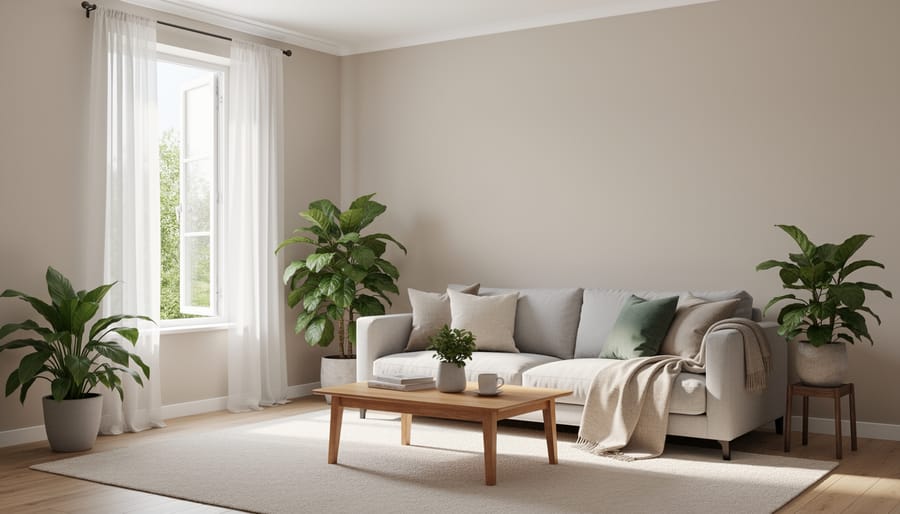
Volatile organic compounds (VOCs) are carbon-based chemicals that evaporate at room temperature, releasing gases that can trigger headaches, dizziness, respiratory irritation, and long-term health issues with prolonged exposure. Conventional paints often contain high levels of these compounds, solvents and additives that improve flow and drying but compromise indoor air quality for weeks or even months after application. According to the EPA, VOC impacts indoor air quality significantly, with concentrations up to ten times higher indoors than outdoors during and immediately after painting.
Low-VOC paints contain fewer than 50 grams per liter of these compounds, while zero-VOC formulations drop below 5 grams per liter. These modern alternatives deliver comparable coverage and durability to traditional paints without the off-gassing. Natural paint options go further: plant-based paints use linseed oil, citrus solvents, and natural pigments; milk paint relies on casein protein, lime, and earth pigments for a matte, historically authentic finish; clay paints offer breathability and moisture regulation, ideal for plaster walls in older homes.
The application process differs slightly by type. Low-VOC latex paints apply like conventional versions but benefit from adequate ventilation during drying. Milk paint arrives as a powder you mix with water, requires a bonding agent on non-porous surfaces, and develops a unique patina over time. Clay paints need careful surface prep and sometimes a primer, but they never fully harden, allowing for easy repairs.
These paints contribute points toward LEED certification (Low-Emitting Materials credit) and meet requirements for green building programs including WELL Building Standard and Living Building Challenge. Architects specifying materials for net-zero homes often mandate low-VOC finishes to maintain strict indoor air quality thresholds. For homeowners, the immediate benefit is a healthier living environment, you can occupy freshly painted rooms within hours rather than days, and sensitive individuals avoid the chemical exposure that makes conventional painting uncomfortable.
3. Organic and Sustainable Textiles
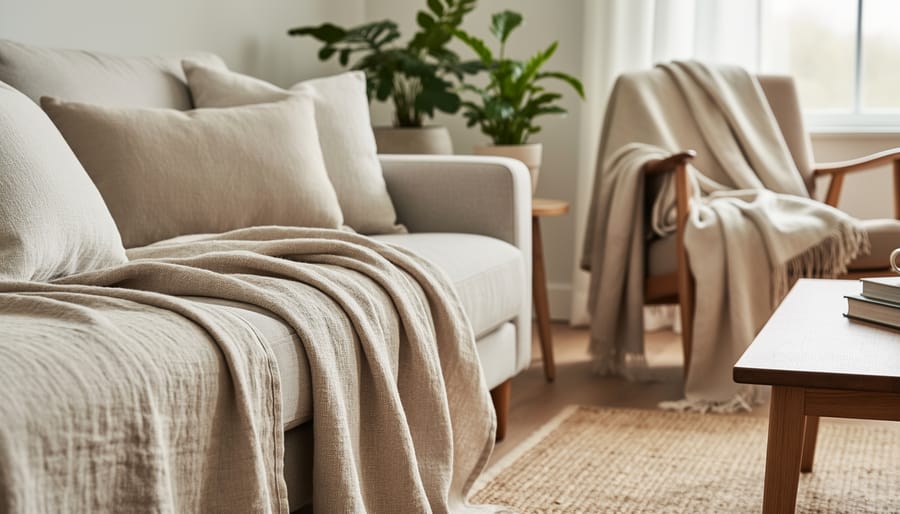
Organic and sustainable textiles transform everyday surfaces, curtains, upholstery, rugs, bedding, into healthier choices that eliminate chemical exposure while cutting agricultural waste. Unlike conventional fabrics grown with synthetic pesticides and processed with harsh dyes, organic cotton, linen, hemp, and recycled materials offer clean alternatives that measurably improve indoor air quality and reduce environmental harm.
Organic cotton stands out for its drastically lower environmental footprint. Organic cotton reduces water use by up to 91% compared to conventional production and eliminates pesticide runoff that contaminates watersheds. Look for GOTS (Global Organic Textile Standard) certification, which verifies organic fiber content, prohibits toxic chemicals throughout manufacturing, and ensures fair labor practices. GOTS-certified bedding and towels feel softer over time because they’re not stiffened with synthetic finishes.
Linen and hemp excel in durability and minimal processing. Linen, made from flax, requires little water and no pesticides; its natural texture suits curtains and slipcovers that soften with washing. Hemp grows densely without irrigation, produces strong fibers ideal for rugs and heavy upholstery, and breaks down completely at end-of-life. Both fabrics resist mold and lint better than cotton, making them practical for high-traffic homes.
Recycled textiles, fabrics reclaimed from post-consumer waste or manufacturing scraps, divert material from landfills and skip resource-intensive fiber production. Recycled polyester rugs and cushions perform well in moisture-prone areas, though they won’t biodegrade like natural fibers.
For verification beyond GOTS, check for OEKO-TEX Standard 100, which tests finished products for harmful substances. Source from retailers that disclose supplier mills and fiber origins. Expect organic and sustainable textiles to cost 20-40% more upfront, but their lifespan often doubles that of conventional equivalents, offsetting the premium through years of use.
4. Bamboo and Cork Flooring
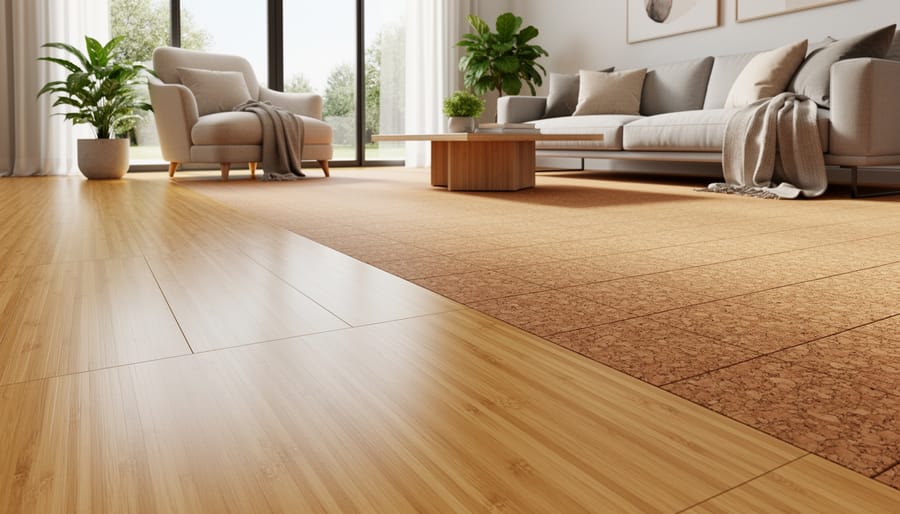
Bamboo and cork represent two of the most renewable flooring materials available to homeowners in 2026, offering compelling environmental advantages over traditional hardwood options. Bamboo reaches harvest maturity in just three to five years, compared to 20-120 years for most hardwood species, while cork can be harvested from the bark of cork oak trees every nine years without harming the tree itself. Both materials actively sequester carbon during their rapid growth cycles, making them carbon-negative choices when production and transportation impacts are minimized through regional sourcing.
Performance characteristics make these materials practical for real-world use. Strand-woven bamboo flooring achieves hardness ratings above red oak, resisting dents and scratches in high-traffic areas. Cork’s cellular structure provides natural thermal insulation and sound dampening, creating warmer floors underfoot and quieter rooms, particularly valuable in multi-story homes or urban apartments. Both materials handle humidity fluctuations better than many hardwoods, though neither should be considered fully waterproof. Engineered bamboo and cork products with moisture-resistant cores suit kitchens and bathrooms better than solid planks.
Installation methods vary by product type. Click-lock floating floors allow DIY installation over existing subfloors, while glue-down or nail-down applications require more preparation but deliver superior stability. Maintenance remains straightforward: regular sweeping, damp mopping with pH-neutral cleaners, and prompt spill cleanup preserve finish integrity. Avoid steam cleaners and excessive water, which can damage any wood-based flooring.
A 2024 renovation in Portland, Oregon demonstrated cork’s versatility when a homeowner installed cork tile flooring throughout a 1,200-square-foot bungalow, combining it with radiant floor heating. The cork’s insulation properties reduced heating costs by approximately 15% compared to the original oak floors, while the material’s natural antimicrobial properties aligned with the owner’s asthma management needs.
5. Upcycled and Vintage Decor Pieces
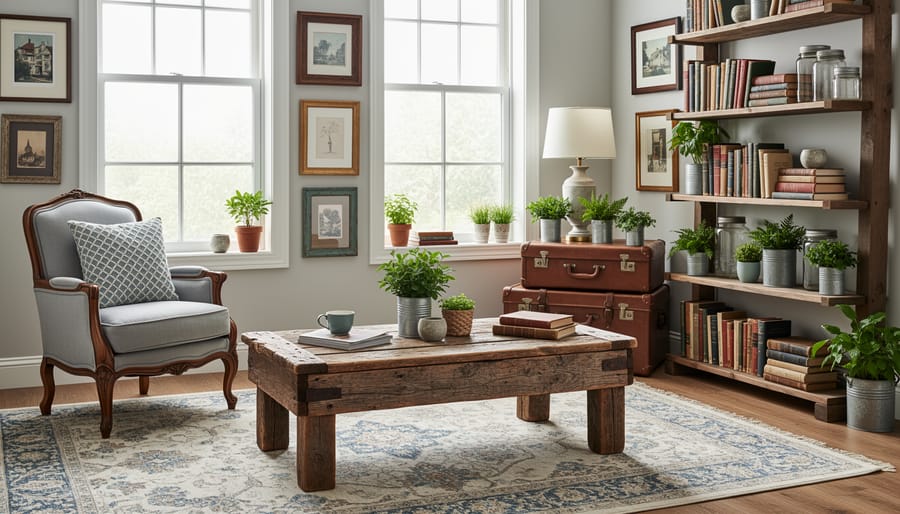
Choosing upcycled and vintage decor pieces directly challenges the linear “buy-use-discard” model that drives unnecessary manufacturing. Every time you bring a refurbished mid-century sideboard or a salvaged factory light into your home, you’re reducing demand for new production, and with it, the energy, raw materials, and transportation emissions that manufacturing requires. This is circular economy thinking in action: extending the useful life of existing objects rather than extracting and processing virgin resources.
Beyond the environmental case, vintage and upcycled items offer something mass-produced decor cannot: individuality. A 1960s teak credenza or a reclaimed window frame turned mirror brings texture, history, and character that distinguish your space from showroom uniformity. These pieces often feature superior craftsmanship and materials, solid wood construction, brass hardware, hand-applied finishes, that outlast contemporary alternatives.
Sourcing requires patience but yields rewards. Estate sales and estate auctions offer curated selections, often at reasonable prices. Online marketplaces like Chairish, 1stDibs, and Facebook Marketplace connect you with sellers nationwide, though you’ll need to assess condition through photos and questions. Local refurbishment studios and architectural salvage yards stock larger items, mantels, doors, cabinetry, and can customize pieces to fit your specifications.
Integrating vintage into modern schemes works best when you treat each piece as an anchor rather than a theme. Pair a single statement item, an industrial shelving unit, a carved wooden mirror, with contemporary furnishings in neutral tones. This approach suits homes pursuing broader sustainability goals, from sustainable energy systems to net-zero home certification, by reducing embodied carbon in your interiors while maintaining a clean, cohesive aesthetic.
6. Energy-Efficient LED Lighting and Natural Light Optimization
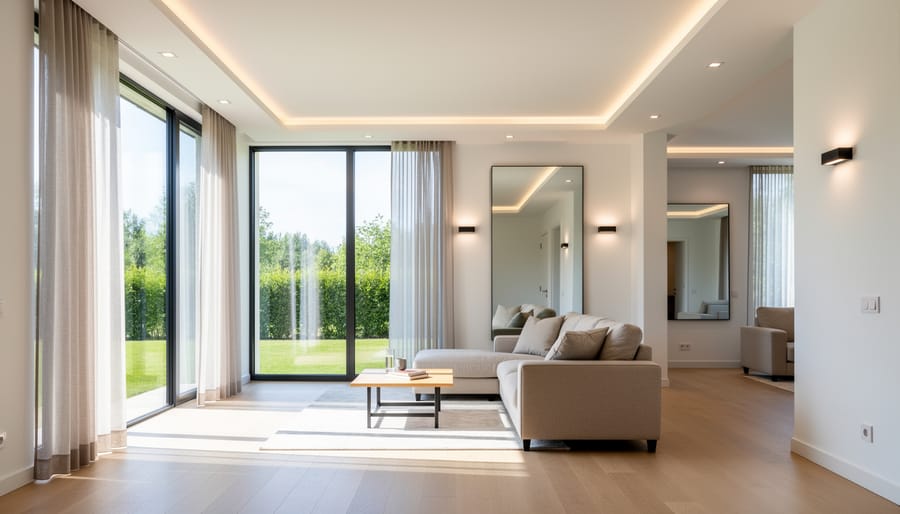
LED lighting has evolved from a purely functional upgrade to a design-forward decor element that slashes energy consumption by up to 75 percent compared to incandescent bulbs. Modern LED fixtures come in diverse styles, from minimalist pendants to vintage-inspired Edison bulbs with LED filaments, allowing homeowners to match any aesthetic while reducing electricity demand. Smart LED systems add another layer of efficiency: dimmers, motion sensors, and programmable schedules ensure lights operate only when needed, and color temperature controls let you shift from warm white (2700K) for evening relaxation to cool daylight (5000K) for task-focused work areas. These features align directly with green building certification programs and net-zero home strategies, where minimizing electrical loads makes renewable energy integration more practical and cost-effective.
Natural light optimization works hand-in-hand with efficient artificial lighting to create spaces that feel brighter and more connected to the outdoors while cutting daytime electricity use. Simple design interventions can dramatically increase daylight penetration:
- Strategic mirror placement opposite windows to bounce light deeper into rooms
- Light-colored or reflective wall finishes that amplify available daylight
- Sheer curtains or translucent shades that diffuse glare while maintaining privacy
- Skylight or solar tube installation in interior spaces starved of windows
- Open floor plans or glass interior partitions that distribute natural light across multiple zones
When planning room layouts, position workstations and reading areas near windows to take advantage of free, high-quality daylight during peak hours. Layer your lighting approach: use task LEDs only where precision work happens, ambient fixtures for general illumination, and natural light as the primary daytime source. This integrated strategy reduces energy bills, improves circadian rhythm alignment, and creates healthier living environments that rely less on mechanical systems.
7. Indoor Plants and Biophilic Design Elements
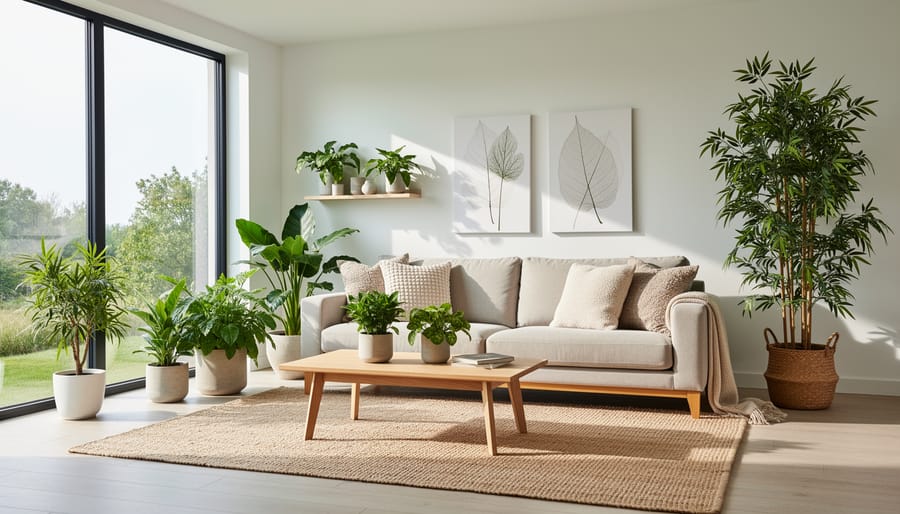
Biophilic design connects building occupants to nature through direct elements like plants and natural materials. Indoor plants serve dual purposes in sustainable home decor: they enhance visual appeal while actively improving air quality through photosynthesis and transpiration. Research from NASA’s Clean Air Study demonstrated that common houseplants remove airborne toxins including formaldehyde, benzene, and trichloroethylene, making them functional additions to low-VOC paint strategies and sustainable building materials.
Snake plants and pothos rank among the most forgiving options for homeowners with limited gardening experience. These species tolerate irregular watering and adapt to low-light conditions, making them suitable for north-facing rooms or interior spaces without direct sun exposure. Spider plants and peace lilies offer similar resilience while providing visible air-purifying action through active transpiration.
Planter selection extends the sustainability profile of indoor greenery. Containers made from reclaimed terracotta, recycled plastic lumber, or sustainably harvested wood complement the environmental advantages of the plants themselves. Avoid chemically treated or virgin plastic planters that contradict the eco-friendly intent.
Living walls represent an advanced application of biophilic design, transforming vertical surfaces into functional green infrastructure. These installations require irrigation systems and structural support but deliver measurable benefits: improved acoustic dampening, thermal insulation, and enhanced psychological wellbeing for occupants. Professional installation ensures proper waterproofing and plant selection for your specific light and humidity conditions.
Successful plant care depends on matching species to your home’s conditions rather than forcing high-maintenance varieties into unsuitable environments. South-facing windows support succulents and herbs, while ferns and philodendrons thrive in humid bathrooms. Group plants with similar water requirements together, and recognize that even modest collections contribute to indoor air quality, much like clean energy benefits compound across multiple building systems.
8. Recycled Glass and Metal Decor Accents
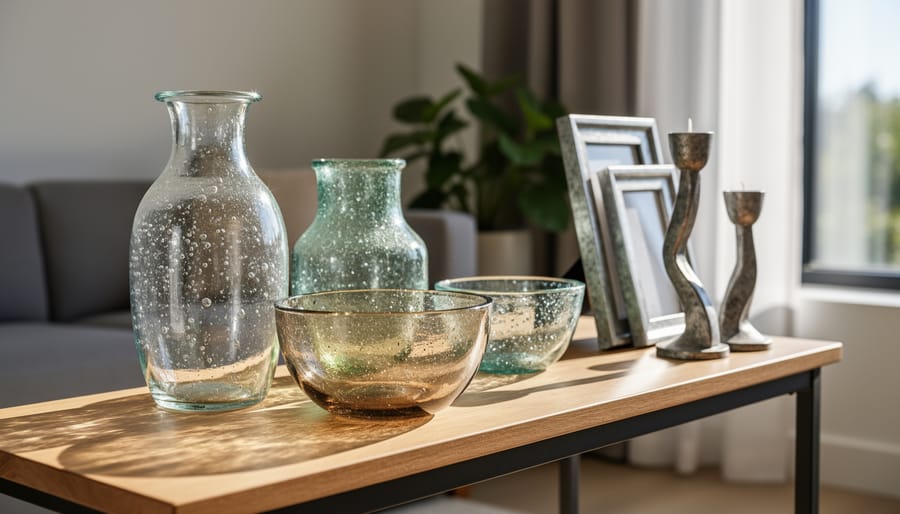
Recycled glass and metal accents deliver substantial environmental benefits while adding distinctive visual appeal to your home. Manufacturing products from recycled glass uses 40% less energy than producing new glass from raw silica, while recycled aluminum requires 95% less energy than mining and processing virgin ore. These savings translate directly into reduced carbon emissions and resource extraction.
Recycled glass appears in numerous applications beyond decorative vases. Countertops made from crushed recycled glass suspended in resin create durable, non-porous surfaces with remarkable depth and color variation. Backsplash tiles manufactured from post-consumer bottles offer consistent quality while diverting waste from landfills. Some manufacturers even produce striking pendant lights by melting and reshaping discarded wine bottles into sculptural fixtures.
Metal accents from recycled content work equally well across design styles. Industrial-look lighting fixtures crafted from reclaimed steel suit modern interiors, while brass hardware made from recycled copper alloys complements traditional spaces. Wall art fabricated from salvaged metal sheets, automotive parts, or even bicycle components adds texture and conversation-starting character.
Verifying genuine recycled content requires attention to manufacturer specifications. Look for products listing specific post-consumer or post-industrial recycled percentages, typically ranging from 60% to 100%. Third-party certifications like Cradle to Cradle, GreenGuard, or SCS Recycled Content provide independent verification. Reputable manufacturers disclose their recycling sources and processes on product labels or websites. Be cautious of vague “eco-friendly” claims without supporting data.
The design versatility of recycled glass and metal rivals conventional materials. Crushed glass comes in virtually any color palette, from subtle neutrals to vibrant jewel tones, while recycled metals accept various finishes including brushed, polished, or deliberately weathered patinas.
Common Questions About Sustainable Home Decor
Is eco-friendly decor more expensive upfront?
Initial costs can run 10-30% higher than conventional options, but durable materials like bamboo flooring and reclaimed wood furniture often last decades longer, lowering lifetime replacement costs. LED fixtures and energy-efficient designs also reduce utility bills, offsetting the premium within a few years.
How do I verify sustainability claims on products?
Look for third-party certifications like FSC (Forest Stewardship Council) for wood, GOTS for textiles, Greenguard for low emissions, and Cradle to Cradle for lifecycle impact. Request manufacturer transparency reports or supply chain documentation, and check whether brands publish environmental audits or material sourcing details on their websites.
Can I mix sustainable pieces with what I already own?
Absolutely, phased integration works well for most homeowners. Start with high-impact swaps like switching to low-VOC paint or adding organic textiles, then replace furniture and flooring as budget allows. Mixing vintage finds with new sustainable items creates layered, personalized interiors without requiring a complete overhaul.
Does sustainable decor improve resale value?
Homes with documented green features, including energy-efficient lighting, low-emission materials, and sustainable flooring, often appraise 3-5% higher in markets where buyers prioritize health and efficiency. Certifications like LEED or third-party material verification provide tangible proof during property assessments.
Beyond these common concerns, many homeowners wonder whether sustainable choices compromise design flexibility. The reality is that eco-friendly materials now span every aesthetic, from minimalist Scandinavian to rustic farmhouse to sleek contemporary. Reclaimed wood adapts to modern or traditional settings, organic linens come in hundreds of weaves and colors, and recycled glass tiles offer the same range as conventional options. You’re choosing responsible sourcing and healthier materials, not limiting your creative vision.
When you encounter conflicting sustainability information, one source calling bamboo the ultimate green material, another raising concerns about adhesives or overseas shipping, prioritize lifecycle transparency over marketing buzzwords. Ask manufacturers about formaldehyde-free binders in bamboo products, request carbon offset documentation for imported goods, and compare full environmental impact reports rather than single attributes. No material is perfect, but informed trade-offs beat greenwashed claims every time.
Choosing environmentally friendly home decor isn’t an all-or-nothing proposition. You can start with a single category that fits your current renovation plans or budget, whether that’s swapping to low-VOC paint for your next room refresh or adding a few indoor plants to improve air quality. Each decision compounds over time, creating a healthier indoor environment while reducing your home’s environmental footprint.
The eight categories we’ve covered deliver measurable benefits. Reclaimed and sustainable materials divert waste, lower embodied carbon, and often outlast conventional alternatives. Low-VOC finishes and organic textiles directly improve the air you breathe daily, reducing exposure to harmful chemicals. Energy-efficient lighting and natural light optimization cut electricity consumption, supporting broader clean energy goals. Biophilic elements and upcycled pieces bring unique character while reinforcing circular economy principles.
These individual choices connect to larger sustainable building practices. When architects specify bamboo flooring or recycled glass countertops, they’re advancing the same principles you apply when selecting a vintage dresser or hemp curtains. Both scales matter. Homeowners drive market demand, which pushes manufacturers toward transparency and better practices, which gives designers more viable green options to specify in new construction and deep retrofits.
Start where it makes sense for your home. Prioritize areas with the highest health impact, like bedrooms and living spaces where you spend the most time. Layer in additional sustainable elements as projects arise. Your home becomes healthier, more distinctive, and part of the solution.