
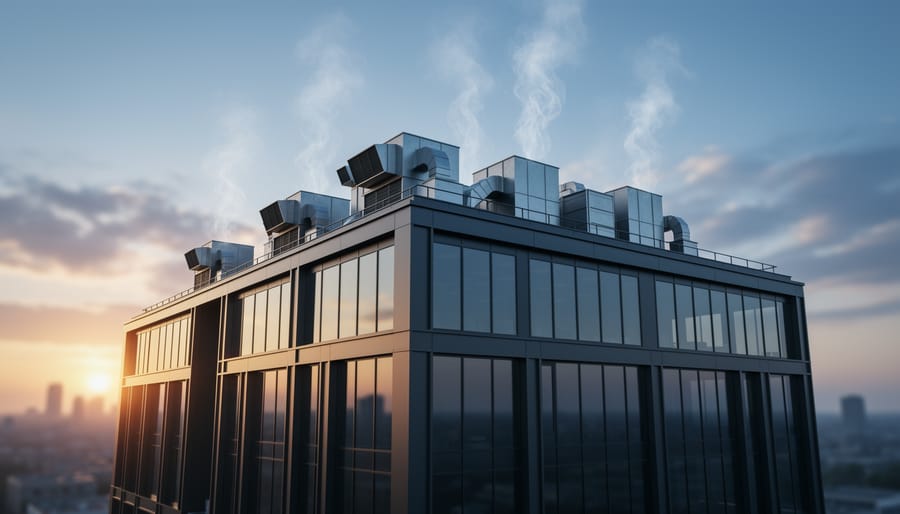
Greenhouse gases are invisible atmospheric compounds that trap heat from the sun, creating a warming blanket around Earth that makes our planet habitable. Without them, Earth’s average temperature would plummet to around -18°C (0°F) instead of the comfortable 15°C (59°F) we experience today. But here’s the challenge facing architects and builders in 2026: human activities have increased concentrations of these gases by over 50% since pre-industrial times, intensifying the natural greenhouse effect and driving climate change that directly impacts how we design and construct buildings.
Carbon dioxide, methane, nitrous oxide, and fluorinated gases make up the primary greenhouse gases affecting our atmosphere. Each molecule works like a microscopic mirror, absorbing infrared radiation that would otherwise escape into space and re-emitting it in all directions. The construction and operation of buildings accounts for roughly 37% of global greenhouse gas emissions, making your material choices and design decisions significant contributors to either the problem or the solution.
Understanding these gases matters because every building material you specify, every HVAC system you install, and every energy source you choose produces a measurable greenhouse gas footprint. Concrete production alone generates about 8% of global CO2 emissions, while building operations release massive amounts through fossil fuel-based heating and cooling. The good news? Modern sustainable architecture practices can dramatically reduce these emissions through passive design strategies, renewable energy integration, and low-carbon materials. Making informed decisions about greenhouse gas impacts isn’t just environmentally responsible anymore. It’s becoming a practical necessity as building codes tighten and clients increasingly demand climate-conscious design.
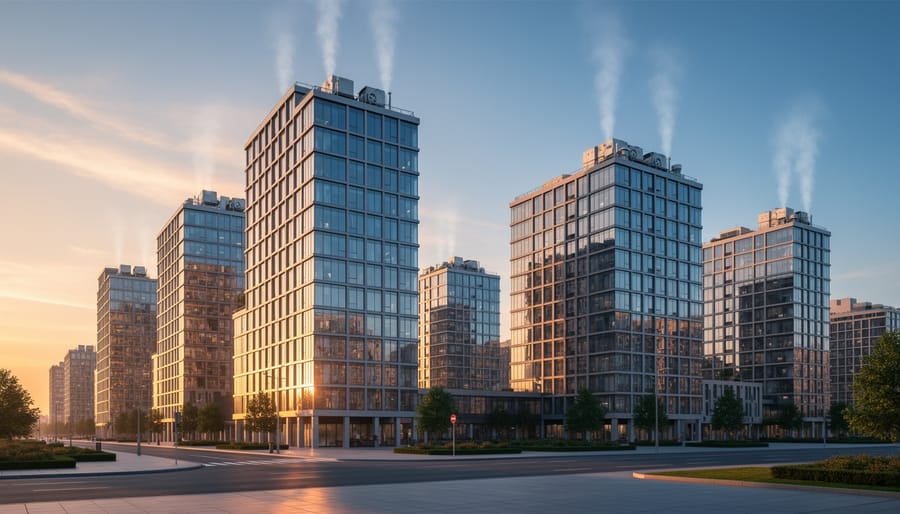
The Science Behind Greenhouse Gases: How They Trap Heat
Think of your home on a sunny winter day. Sunlight streams through the windows, warming the interior. Even when it’s freezing outside, the inside stays comfortable because the glass lets light in but prevents much of that warmth from escaping back out. Earth’s atmosphere works similarly, and greenhouse gases are what make it possible.
The greenhouse effect is the process through which heat trapped near Earth’s surface by atmospheric gases keeps our planet habitable. Here’s how it works: sunlight passes through the atmosphere and warms the ground and oceans. This heated surface then releases energy back toward space as infrared radiation (heat). Greenhouse gases in the atmosphere absorb much of this outgoing heat and radiate it back downward, creating a warming effect that maintains temperatures suitable for life.
Without this natural blanket, Earth would be about 60 degrees Fahrenheit colder than it is now. Too little greenhouse effect and we’d freeze. Too much and we overheat.
The key is understanding that these gases don’t block sunlight coming in. They’re transparent to visible light but opaque to the infrared wavelengths that Earth emits as it cools. Picture a one-way valve: energy enters easily as sunlight, but exits slowly as heat because these gases keep catching and re-radiating it back to the surface.
For builders and homeowners, this science matters because construction choices directly affect the concentration of these gases. The materials you select, the energy systems you install, and how you manage land during development all influence how much heat-trapping gas enters that atmospheric blanket surrounding our planet.
The Main Greenhouse Gases You Should Know
When you’re planning a building project in 2026, understanding the specific gases that drive climate change helps you make informed material and design choices. Official inventories track a core set of compounds based on their heat-trapping ability and atmospheric concentration. Canada’s official greenhouse gas inventory gases include carbon dioxide, methane, nitrous oxide, and several synthetic compounds, providing a framework that government agencies worldwide use to measure and report emissions.
These gases differ in both their sources and their warming potential, which matters when you’re choosing building materials or energy systems:
- Carbon dioxide (CO2)
- The most abundant greenhouse gas from human activity, released when we burn fossil fuels, manufacture cement, or clear forests. It persists in the atmosphere for centuries and accumulates over time.
- Methane (CH4)
- A powerful heat trapper with roughly 25 times the warming impact of CO2 over a century, though it breaks down faster. In construction contexts, it’s released from natural gas systems and decomposing organic waste on-site.
- Nitrous oxide (N2O)
- Nearly 300 times more potent than carbon dioxide per molecule, this gas comes from certain industrial processes and the breakdown of nitrogen compounds. It has a long atmospheric lifetime of over a century.
- Hydrofluorocarbons (HFC)
- Synthetic gases used in refrigeration and air conditioning systems, with warming potentials thousands of times greater than CO2. These are particularly relevant if you’re specifying HVAC equipment for your building.
Each of these gases traps heat near Earth’s surface through the greenhouse effect, but at different intensities and timescales. Carbon dioxide dominates the total volume of emissions, accounting for the majority of the 6,343 million metric tons the U.S. released in 2022, while the other gases contribute disproportionately to warming despite smaller quantities. When you’re evaluating the climate impact of construction choices, you’ll often see emissions expressed in “CO2 equivalent,” a metric that converts all gases to a common scale for comparison. This standardized measurement lets you compare the footprint of concrete production against the long-term emissions from your heating system, giving you a practical tool for prioritizing where to focus your sustainability efforts.
Where Greenhouse Gases Come From: Sources in the Built Environment
Construction Materials and Manufacturing
Building materials carry a hidden carbon cost long before they reach your construction site. The manufacturing process for common construction materials releases substantial amounts of CO2 through both energy consumption and chemical reactions.
Cement production stands out as a particularly significant contributor. When limestone is heated to produce cement, the chemical reaction itself releases carbon dioxide, separate from the emissions generated by burning fuel to achieve those high temperatures. This dual emission pathway makes concrete manufacturing one of the construction industry’s largest sources of greenhouse gases. Steel production follows a similar pattern, requiring enormous energy inputs that typically come from fossil fuel combustion.
The extraction and processing of other building materials, from aluminum framing to vinyl siding to glass, each add their own carbon footprint. Even natural materials like lumber involve emissions from harvesting, transport, and processing, though trees serve as carbon sinks while growing.
Understanding these embedded emissions helps you make more informed material choices. Lower-carbon alternatives exist for many traditional materials, and considering a product’s full lifecycle emissions, not just its performance characteristics, has become essential for sustainable building in 2026.
Energy Consumption in Buildings
Buildings consume enormous amounts of energy for heating, cooling, and electricity, and most of that energy still comes from burning fossil fuels. When natural gas heats your home or coal-fired plants power your air conditioning, carbon dioxide releases directly into the atmosphere. In the U.S., the building sector accounts for a substantial portion of total greenhouse gas emissions, primarily through this fossil fuel combustion.
Residential and commercial buildings burn natural gas in furnaces and boilers, creating CO2 emissions on-site. Even when buildings use electricity, emissions occur at power plants that burn coal, natural gas, or oil to generate that electricity. The heating and cooling systems in a typical home can produce several tons of CO2 annually, depending on the energy source, climate zone, and building efficiency.
Older buildings with poor insulation and outdated HVAC systems consume more energy and generate higher emissions. A drafty 1970s house might use twice the energy of a well-insulated modern build, translating to double the greenhouse gas output for the same comfort level.

Understanding Greenhouse Gas Inventories and Measurements
Tracking greenhouse gas emissions requires standardized methods that let countries compare their impacts accurately. Official inventories like those maintained by Canada and the United States follow strict protocols to estimate emissions from human activities. These inventories measure emissions of carbon dioxide, methane, nitrous oxide, and hydrofluorocarbons from various sources, then calculate removals by natural sinks like forests and soil.
The key to making sense of these measurements is understanding CO2 equivalent, a standard unit that converts different gases to a common scale based on their warming potential. Since methane traps far more heat than carbon dioxide over a given timeframe, one ton of methane counts as multiple tons of CO2 equivalent in official calculations. This conversion allows scientists and policymakers to add up emissions from different gases and get a complete picture of a nation’s climate impact.
The numbers reveal both challenges and opportunities. According to the EPA, 2022 emissions were 6,343 million metric tons of CO2 equivalent in the United States when excluding the land sector. But land use tells an encouraging story: forests, grasslands, and other natural areas absorb carbon as trees grow and soils accumulate organic matter. The EPA reports that Land Use, Land-Use Change, and Forestry in the United States is a net sink and offsets 13% of greenhouse gas emissions.
For your building project, these inventory methods matter because they provide the framework for carbon footprint calculations and green building certifications. When you evaluate materials or energy systems, the comparisons rely on this same CO2 equivalent standard. Understanding how emissions are measured helps you make informed choices and accurately assess claims from manufacturers and contractors about their products’ environmental performance.
What This Means for Your Building or Renovation Project
Understanding greenhouse gases transforms how you approach every building decision. When you recognize that cement production releases CO2 through chemical reactions and that heating systems burn fossil fuels that trap heat in the atmosphere, you naturally start evaluating alternatives differently.
Material choices become more strategic. That concrete foundation you’re planning contributes to atmospheric warming not just through production energy but through the chemical process itself. Steel, wood, insulation, each carries a different carbon footprint. You’ll want to compare embodied carbon across options, favoring materials that sequester rather than release greenhouse gases where practical. Salvaged materials and natural alternatives often perform well on this measure.
Your energy systems deserve equal scrutiny. A gas furnace continuously releases CO2 during operation, while electric heat pumps powered by renewable sources minimize ongoing emissions. The difference compounds over decades. Windows, insulation quality, and building orientation all affect how much energy you’ll need, directly influencing your project’s long-term atmospheric impact.
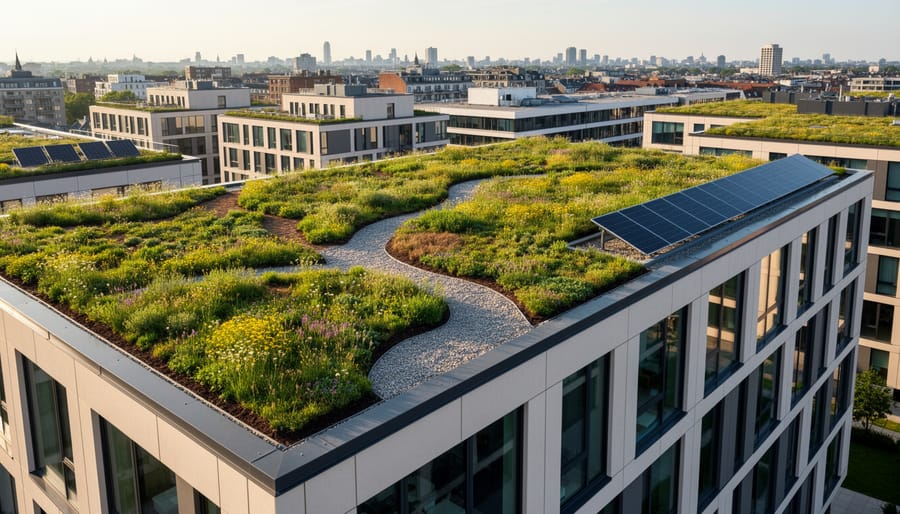
Landscaping decisions matter more than many realize. Trees and vegetation act as carbon sinks, absorbing CO2 from the atmosphere. Preserving existing mature trees during construction and planning strategic new plantings helps offset unavoidable emissions from your build. Green roofs and living walls extend this principle to the structure itself.
These considerations don’t require sacrificing aesthetics or functionality. Projects that save money sustainably through reduced energy consumption demonstrate the financial logic alongside environmental benefits. Successful examples worldwide prove that greenhouse gas awareness enhances rather than limits design possibilities.
Your renovation or new build will either add to atmospheric greenhouse gases or help minimize them. That choice starts with understanding exactly what you’re trying to reduce.
Practical Strategies to Reduce Greenhouse Gas Emissions in Construction
Material Selection and Sourcing
Swap concrete and steel for engineered timber, reclaimed brick, or hempcrete where feasible, these alternatives can cut embodied carbon by 30 to 70 percent compared to conventional materials. Sourcing locally reduces transport emissions and often yields fresher, regionally appropriate stock. Look for third-party environmental product declarations that quantify a material’s carbon footprint across its lifecycle; this transparency lets you compare apples to apples rather than relying on vague green claims. Insulation choices matter too: cellulose, cork, and sheep’s wool typically carry lower embodied energy than foam products derived from petrochemicals. Even small shifts add up: choosing low-carbon grout, paints with minimal VOCs, and sustainably harvested wood trim can collectively shave hundreds of kilograms of CO₂ equivalent from a single-family home. Don’t overlook landscaping, vertical gardens and native plantings act as carbon sinks while reducing heat-island effects that drive air-conditioning demand.
Energy Systems and Efficiency
Reducing operational emissions starts with rethinking how your building consumes energy. Transitioning from fossil fuel systems to electric heat pumps powered by renewable sources eliminates combustion emissions entirely. Solar panels, whether rooftop arrays or community-scale installations, directly offset grid electricity demand and cut CO2 from power generation. Pair renewables with battery storage to maximize clean energy use during peak hours.
Energy efficiency cuts emissions by reducing consumption at the source. Passivhaus designs achieve dramatic reductions through superior insulation, airtight construction, and heat recovery ventilation, often slashing heating and cooling needs by 75% compared to conventional builds. Triple-glazed windows, properly sealed building envelopes, and strategic shading further minimize energy waste.
Smart controls and programmable thermostats optimize system performance without sacrificing comfort. LED lighting uses 75% less energy than incandescent bulbs while lasting decades longer. For renovations, upgrading to high-efficiency appliances and improving insulation in walls and attics delivers measurable emission reductions. These measures compound over a building’s lifespan, turning modest upfront investments into substantial long-term carbon savings while lowering utility costs.
Understanding how greenhouse gases trap heat and where they originate from construction activities puts you in control of your building project’s environmental footprint. Every material choice, every energy system decision, and every square foot of preserved or planted vegetation contributes to the atmospheric balance that affects us all. The knowledge you’ve gained here isn’t abstract science, it’s the foundation for selecting lower-carbon cement alternatives, choosing efficient heating systems, and integrating natural carbon sinks into your landscape design.
The cumulative effect of individual building decisions shapes our shared environment. When you apply these principles to your 2026 project, you join a growing movement of homeowners and architects who recognize that sustainable construction starts with understanding the science. Your choices matter, not just for reducing emissions but for demonstrating that informed building practices can meet modern standards while respecting planetary limits. That’s the core of advancing sustainable architecture, translating scientific knowledge into tangible action, one project at a time.