
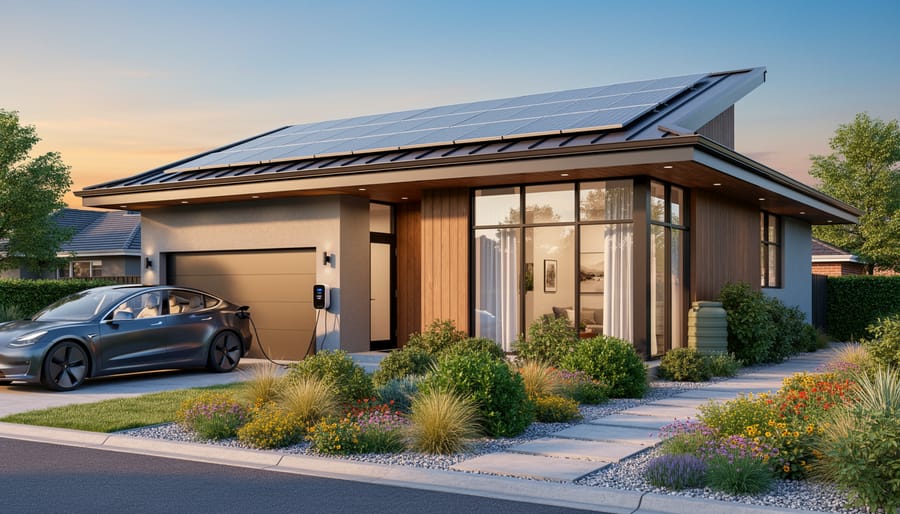
Building a green home starts with understanding the core principles that separate sustainable construction from conventional methods. Energy efficiency, water conservation, material selection, and indoor air quality form the foundation of every successful green building project. These elements work together to reduce environmental impact while creating healthier living spaces that cost less to operate over time.
The investment in green building delivers measurable returns. Homeowners typically see energy bills reduced by 20-40% compared to standard construction, while property values increase an average of 8-10% according to recent market analyses. Beyond financial metrics, green homes provide superior comfort through better temperature regulation, improved air quality, and reduced maintenance requirements. The initial premium for sustainable features ranges from 2-7% above conventional building costs, but most homeowners recover this investment within 5-8 years through utility savings alone.
Modern green building has evolved far beyond solar panels and recycled materials. Today’s sustainable homes integrate smart technology for energy management, utilize advanced insulation systems that eliminate thermal bridging, and incorporate passive design strategies that harness natural heating and cooling. High-performance windows, heat recovery ventilation systems, and water reclamation features have become standard in cutting-edge projects.
The key to successful green home construction lies in planning these elements from the earliest design phase rather than adding them as afterthoughts. Working with architects and builders experienced in sustainable practices ensures that energy modeling, site orientation, and material choices align with your specific climate and budget. Whether you’re building from the ground up or undertaking major renovations, the strategic integration of green building principles creates homes that benefit both inhabitants and the environment for decades to come.
What Makes a Home Truly Green?
Beyond Solar Panels: The Complete Picture
Building a truly sustainable home requires thinking beyond individual components to embrace a comprehensive, systems-based approach. The journey begins before construction even starts—with thoughtful site selection. Choosing a location that maximizes natural daylight, considers prevailing winds for passive cooling, and minimizes environmental disruption sets the foundation for efficiency gains that no amount of technology can replicate later.
Material selection demands equal attention to both environmental impact and building performance. Reclaimed wood, recycled steel, and low-VOC (volatile organic compound) paints reduce a home’s carbon footprint while improving indoor air quality. These choices matter because construction materials account for roughly 11% of global carbon emissions. The key is understanding embodied energy—the total energy consumed to extract, manufacture, and transport materials to your building site.
Systems integration represents where green building truly shines. Your heating, cooling, ventilation, and lighting shouldn’t operate as isolated elements but as interconnected systems that optimize performance. For example, high-performance windows reduce HVAC loads, allowing you to install smaller, more efficient climate control systems that cost less to operate.
Finally, consider lifecycle planning from day one. A green home should adapt to future needs, incorporate durable materials that minimize replacement cycles, and ultimately be deconstructable rather than demolishable. This forward-thinking approach means your sustainable investment delivers benefits for decades, not just years, while preserving resources for future generations.
Essential Design Principles for Green Construction
Orientation and Site Planning
Strategic site planning is one of the most cost-effective ways to improve your home’s energy efficiency, yet it’s often overlooked. The orientation of your home—how it sits relative to the sun’s path—directly impacts heating and cooling costs, natural lighting, and overall comfort.
In the Northern Hemisphere, positioning the longest side of your home facing south captures maximum sunlight during winter months when the sun travels lower across the sky. This passive solar design can reduce heating needs by 25-40% compared to poorly oriented homes. Large windows on the south side welcome winter warmth, while properly designed overhangs block the higher summer sun, keeping interiors cool. A Colorado-based green home completed in 2022 demonstrated this principle beautifully: the homeowners reported 35% lower heating costs in the first year simply through optimal orientation combined with strategic window placement.
Consider existing landscape features during planning. Preserving mature trees provides natural shade and windbreaks while maintaining the site’s ecological balance. Position your home to minimize grading and soil disruption, which preserves drainage patterns and reduces erosion. Native vegetation should be protected whenever possible, as it requires less maintenance and supports local wildlife.
Wind patterns matter too. In colder climates, building into hillsides or using existing tree lines as northern buffers reduces heat loss. Conversely, coastal or warm-climate homes benefit from designs that capture prevailing breezes for natural ventilation.
Working with your site’s natural characteristics rather than against them reduces construction costs, minimizes environmental impact, and creates a home that performs efficiently for decades.
Passive Design Strategies That Cut Energy Bills
Smart passive design harnesses natural climate patterns to maintain comfortable temperatures year-round, dramatically reducing your reliance on mechanical heating and cooling systems. These time-tested strategies can slash energy bills by 30-50% compared to conventional homes.
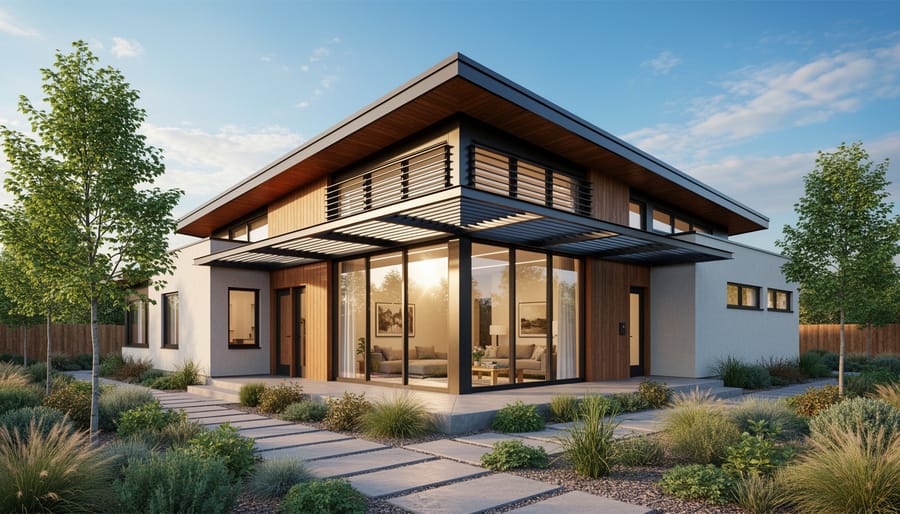
Strategic window placement forms the foundation of passive solar design. South-facing windows (in the Northern Hemisphere) capture abundant winter sunlight when the sun sits lower in the sky, warming your home naturally. Meanwhile, carefully calculated roof overhangs block intense summer sun when it’s higher overhead, preventing unwanted heat gain. This simple architectural feature acts like a seasonal thermostat.
Thermal mass materials such as concrete floors, brick walls, or stone fireplaces absorb heat during the day and release it gradually at night, evening out temperature swings. A Colorado builder recently incorporated polished concrete floors with radiant heating tubes, creating a beautiful, energy-efficient system that stores solar heat and reduces furnace runtime by 40%.
Cross-ventilation design positions windows on opposite walls to create natural airflow corridors. When you open strategically placed windows, prevailing breezes flush out hot air and draw in cooler air without running air conditioning. Consider installing operable clerestory windows near the ceiling to exhaust hot air that naturally rises.
Night cooling techniques take advantage of temperature drops after sunset. Automated windows or vents can open automatically when exterior temperatures fall below interior levels, purging accumulated heat. Combined with thermal mass, your home stays comfortable well into the next afternoon.
Smart Material Selection
Smart material selection forms the foundation of any green home, directly impacting both environmental footprint and long-term performance. Prioritize materials with third-party certifications like FSC-certified wood, which guarantees responsible forest management, or reclaimed timber that gives new life to existing resources. Bamboo flooring offers remarkable durability while regenerating in just 3-5 years, compared to hardwood’s decades-long growth cycle.
Locally-sourced materials dramatically reduce transportation emissions while supporting regional economies. A Colorado project reduced its carbon footprint by 30% simply by sourcing stone and lumber within 150 miles of the build site. Recycled steel framing provides the same structural strength as virgin steel but uses 75% less energy to produce.
For insulation, consider cellulose made from recycled newspaper or sheep’s wool, both offering excellent thermal performance without the off-gassing concerns of conventional options. Low-VOC paints and finishes protect indoor air quality, particularly important since Americans spend 90% of their time indoors. The key is balancing sustainability with durability—materials that last longer ultimately reduce environmental impact by minimizing replacement cycles and waste generation over your home’s lifetime.
Critical Building Systems for Energy Efficiency
High-Performance Insulation and Air Sealing
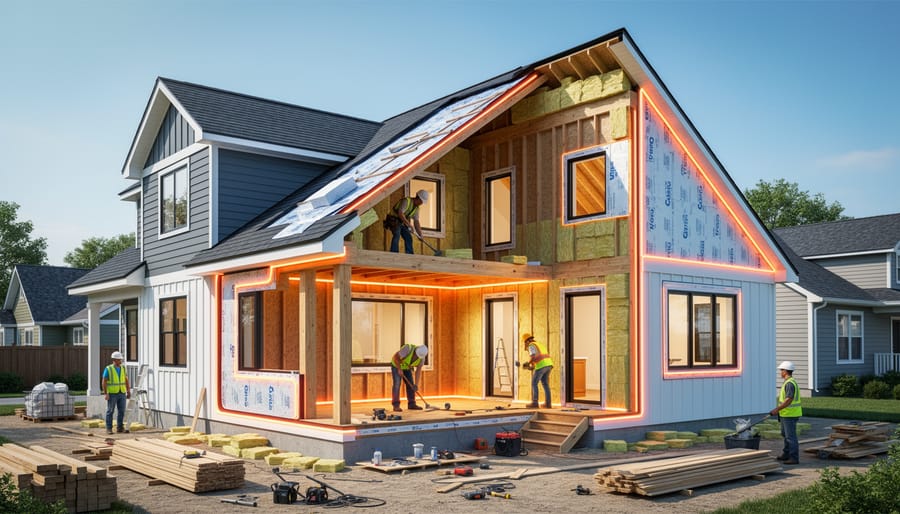
Creating an effective building envelope is fundamental to green home construction, dramatically reducing energy consumption while improving indoor comfort. Today’s high-performance insulation goes far beyond traditional fiberglass batts. Spray foam insulation, for instance, simultaneously insulates and seals gaps, achieving R-values of R-6 to R-7 per inch while eliminating air leakage. Rigid foam boards offer continuous insulation that prevents thermal bridging through wall studs, while mineral wool provides excellent fire resistance and sound dampening properties.
Air sealing deserves equal attention to insulation since even small gaps can undermine efficiency. Modern air barrier systems use specialized tapes, gaskets, and membranes applied at critical junctions like foundation-to-wall connections and window installations. Advanced builders use blower door tests to measure air changes per hour, targeting the Passive House standard of 0.6 ACH50 or better.
Real-world applications demonstrate impressive results. A recent Massachusetts retrofit project combined dense-pack cellulose insulation with comprehensive air sealing, reducing heating costs by 60 percent while qualifying for substantial energy efficiency rebates. The initial investment typically pays for itself within seven to twelve years through reduced utility bills, making it both environmentally and financially sound.
HVAC Systems for Minimal Energy Consumption
Selecting the right HVAC system dramatically reduces a green home’s energy footprint while maintaining superior comfort. Heat pumps stand as the cornerstone of efficient climate control, transferring heat rather than generating it through combustion. Air-source heat pumps work well in moderate climates, while cold-climate models now function effectively in temperatures well below freezing, achieving heating efficiencies 300% higher than traditional systems.
Geothermal heat pumps take efficiency further by tapping into stable underground temperatures. Though installation costs run higher due to ground loop excavation, these systems deliver consistent performance year-round with minimal energy input. A Massachusetts family reduced their heating costs by 70% after installing a geothermal system in their 2,400-square-foot home, recouping the premium investment within eight years.
Energy Recovery Ventilators maintain indoor air quality without wasting conditioned air. ERVs transfer heat and humidity between incoming fresh air and outgoing stale air, reducing the energy burden on your primary HVAC system by up to 40%.
Right-sizing matters critically in green homes. Oversized systems cycle inefficiently and create humidity problems, while undersized units struggle to maintain comfort. Professional Manual J load calculations account for your home’s superior insulation and air-sealing, typically resulting in equipment 30-50% smaller than conventional installations, saving upfront costs and ongoing energy expenses.
Water Conservation and Management
Water management in green homes goes far beyond installing low-flow showerheads. Today’s integrated water systems can reduce household consumption by 50% or more while maintaining comfort and functionality.
Rainwater harvesting systems capture precipitation from roofs, filtering and storing it in underground or above-ground tanks for landscape irrigation, toilet flushing, and even potable use with proper treatment. A typical residential system on a 2,000-square-foot roof can collect approximately 1,200 gallons of water from just one inch of rainfall. The Austin Water Utility reports that homes with rainwater collection systems reduce municipal water demand by 40-60% annually.
Greywater recycling takes water from showers, bathroom sinks, and washing machines, treating it through filtration systems before redirecting it to irrigate gardens or flush toilets. This secondary use extends water utility while reducing strain on septic or municipal systems. Modern greywater systems include automated controls that ensure safe, odor-free operation.
High-efficiency plumbing fixtures complete the conservation picture. WaterSense-certified toilets use just 1.28 gallons per flush compared to older models consuming 3.5 gallons. Similarly, efficient faucets and showerheads incorporate aerators that maintain water pressure while reducing flow rates.
These systems work together seamlessly. A California case study demonstrated a family of four reducing their water bill by $800 annually while contributing to regional drought resilience through comprehensive water management integration.
Clean Energy Integration
Solar Energy: Photovoltaic vs. Thermal
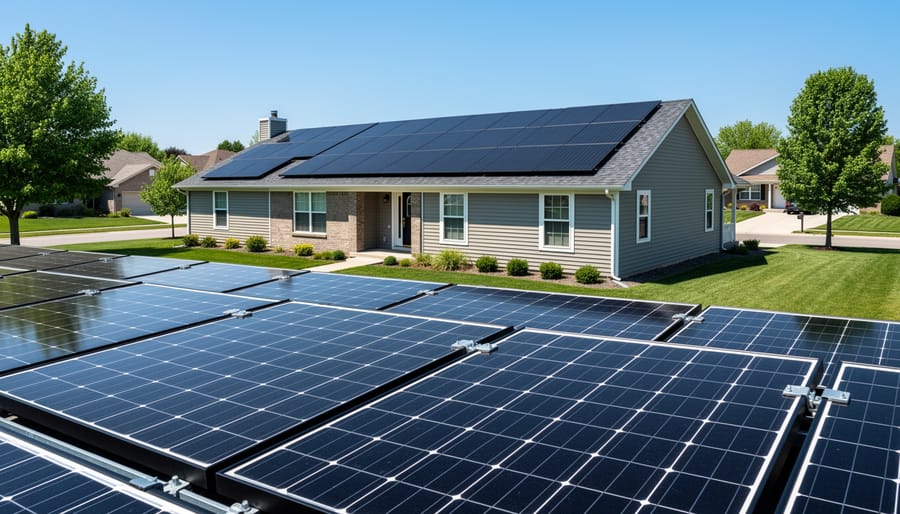
When designing a solar strategy for your green home, you’ll encounter two distinct technologies: photovoltaic (PV) panels that generate electricity, and solar thermal systems that heat water directly. Understanding the differences helps optimize your investment.
Photovoltaic systems convert sunlight into electrical power using semiconductor cells. This electricity runs your home’s lighting, appliances, and HVAC systems, with excess energy often sold back to the grid through net metering programs. Modern PV panels achieve 15-22% efficiency and typically last 25-30 years. A standard residential installation ranges from 5-10 kilowatts, requiring approximately 300-600 square feet of roof space. Installation costs average $15,000-$25,000 before incentives, with most homeowners seeing payback periods of 6-10 years.
Solar thermal systems heat water by circulating fluid through roof-mounted collectors. These systems excel at their specific task, achieving 60-70% efficiency in converting sunlight to usable heat. They’re particularly cost-effective in households with high hot water demand, costing $3,000-$7,000 installed. Many architects recommend hybrid approaches: PV panels for electrical needs combined with high-efficiency heat pump water heaters, or dedicated solar thermal for homes with pools or radiant floor heating.
Your roof orientation, local climate, and energy usage patterns determine which technology delivers better returns. South-facing roofs with minimal shade work best for both systems, though installation complexity varies significantly.
Battery Storage and Grid Independence
Battery storage becomes financially viable when time-of-use electricity rates create significant price differences between peak and off-peak hours, or when frequent grid outages threaten comfort and productivity. Homeowners in areas with net metering restrictions also benefit, as batteries maximize self-consumption of solar energy rather than selling excess power back to utilities at unfavorable rates.
For partial grid independence, size your battery system to cover essential loads during outages: refrigeration, lighting, internet connectivity, and critical medical equipment. A 10-13 kWh battery typically handles these needs for 24-48 hours. One homeowner in Colorado paired a 13.5 kWh battery with a 7 kW solar array, reducing grid dependence by 75 percent while maintaining connection for extended cloudy periods.
Complete grid independence requires substantial investment. Calculate your home’s average daily consumption, then multiply by three to five days for weather buffer. A typical household consuming 30 kWh daily needs 90-150 kWh of storage capacity, plus an oversized solar array to recharge batteries while powering the home. This approach costs $40,000-$80,000 but eliminates monthly utility bills entirely.
Smart energy management systems optimize battery performance by prioritizing solar charging during peak production hours and scheduling high-energy tasks like laundry during surplus generation periods.
Real-World Green Home Success Stories
Net-Zero Suburban Renovation
When the Martinez family purchased their 1970s ranch-style home in suburban Portland, the 2,200-square-foot property was hemorrhaging energy through single-pane windows and minimal insulation. Three years later, their utility bills dropped to zero dollars, transforming what was once an energy liability into a net-zero energy showcase.
The renovation strategy focused on three core areas. First, the team addressed the building envelope by adding 8 inches of closed-cell spray foam insulation to walls and upgrading to triple-pane, argon-filled windows with low-emissivity coatings. These changes reduced heating and cooling loads by 65 percent compared to pre-renovation levels.
Second, they installed an 8.5-kilowatt rooftop solar array paired with a 13.5-kilowatt-hour battery storage system. This combination generates approximately 11,500 kilowatt-hours annually, exceeding the home’s total energy consumption by roughly 800 kilowatt-hours per year.
Third, mechanical systems received complete overhauls. A ground-source heat pump replaced the aging natural gas furnace, reducing HVAC energy use by 70 percent. The family also installed a heat pump water heater and ENERGY STAR-certified appliances throughout.
The measurable results speak for themselves. The home now produces 107 percent of its annual energy needs, and the family’s carbon footprint from home energy use has effectively reached zero. While the renovation required a $78,000 investment in energy efficiency measures and renewable systems, projected savings indicate a 14-year payback period through eliminated utility costs and available tax incentives.
Budget-Conscious New Construction
The Thompson family in Portland, Oregon proved that green building doesn’t require an unlimited budget. Their 1,800-square-foot home achieved LEED Gold certification while maintaining construction costs just 8% above conventional building standards in their area.
Their success came from strategic prioritization rather than trying to implement every possible green feature. The family focused their budget on three high-impact areas: superior insulation and air sealing, energy-efficient windows, and a right-sized heat pump system. These foundational choices reduced their energy consumption by 45% compared to code-minimum homes.
Where did they save? The Thompsons opted for durable, locally-sourced materials over exotic sustainable imports. They chose quality laminate flooring instead of reclaimed hardwood and installed standard-efficiency LED fixtures rather than designer sustainable lighting. Their countertops came from recycled glass manufactured regionally, cutting both costs and transportation emissions.
The home includes a basic 4kW solar array, sized to offset their reduced energy needs rather than aiming for net-zero immediately. They designed the roof structure to accommodate future panel expansion as their budget allows.
Smart planning also meant working with their lot’s natural features. By positioning the home to maximize southern exposure and preserve existing trees for shade, they reduced mechanical system requirements without additional expense.
Five years later, their utility bills average 65% lower than neighboring homes, and the family has reinvested those savings into adding more solar capacity. Their experience demonstrates that certification and performance don’t require premium pricing when priorities align with impact.
Navigating Costs and Return on Investment
Building a green home typically costs 5-10% more upfront than conventional construction, but understanding where to invest makes all the difference. The key is distinguishing between features that pay for themselves and those that represent a commitment to environmental values over financial return.
The highest ROI green features consistently prove themselves through utility savings. Superior insulation and air sealing typically recoup costs within 3-5 years through reduced heating and cooling bills. Energy-efficient windows, particularly triple-pane models in colder climates, pay back their premium in 7-10 years. LED lighting and Energy Star appliances offer immediate savings with minimal additional investment. Solar panels have become increasingly cost-effective, with many homeowners achieving payback in 8-12 years, especially when factoring in tax incentives and net metering programs.
Water-efficient fixtures and rainwater harvesting systems deliver solid returns in areas with high water costs, often breaking even within 5-7 years. Heat pump technology, whether for space heating or water heating, provides excellent long-term value despite higher installation costs, with payback periods of 6-10 years depending on your climate and energy rates.
Some green features require longer perspectives. Geothermal systems may take 15-20 years to recoup costs, though they can last 25-50 years. Premium sustainable materials like FSC-certified hardwoods or recycled countertops rarely save money directly but contribute to healthier indoor air quality and reduced environmental impact.
The best strategy combines high-ROI efficiency measures with select environmental upgrades that align with your values. A case study from Portland, Oregon showed homeowners investing heavily in insulation and solar panels while choosing standard cabinets, achieving net-zero energy status without breaking the budget. They prioritized performance over aesthetics where it mattered most.
Consider that green homes also command premium resale values, with studies showing 3-5% higher sale prices. Factor in rising energy costs, potential carbon taxes, and increasing buyer preference for sustainable features when calculating true return on investment.
Working with Architects and Builders
Finding the right professionals to execute your green home vision requires more careful vetting than conventional construction projects. Start by seeking architects and builders with specific green building certifications such as LEED AP (Accredited Professional), Certified Green Professional, or Passive House credentials. These credentials demonstrate commitment to sustainable practices and ongoing education in environmental building standards.
When interviewing potential architects, ask about their experience with energy modeling software and whole-house systems thinking. Request portfolios showing completed green projects with documented performance data, not just beautiful photos. A qualified green architect should discuss how building orientation, thermal mass, and natural ventilation strategies will work specifically for your climate zone.
For builders, inquire about their subcontractor network. Green construction often requires specialized trades like spray foam insulation installers, heat pump technicians, and solar panel contractors. Ask how they handle quality control for air sealing and thermal bridging—details that dramatically impact performance but remain hidden once construction finishes.
Establish clear communication protocols from day one. Regular site meetings should include discussions about material substitutions, as supply chain issues may arise. Ensure your contracts include performance guarantees and specify that any changes maintaining or improving green standards need your approval.
Consider hiring a green building consultant or energy rater to provide third-party verification throughout construction. This investment, typically $2,000-$5,000, helps catch problems early when they’re inexpensive to fix. Blower door tests and thermal imaging during construction verify that your home actually performs as designed, not just looks green on paper.
Request references from previous clients and visit completed projects if possible. Speaking with homeowners who’ve lived in the builder’s green homes for at least one heating and cooling season provides invaluable insights about real-world performance and professional reliability.
Building a green home is no longer a niche pursuit reserved for environmental purists with unlimited budgets. As we’ve explored throughout this guide, sustainable construction has evolved into a practical, financially sound approach that delivers measurable benefits for homeowners, communities, and the environment. The combination of advancing technologies, improved building materials, and expanding incentive programs means green building is more accessible than ever before.
The evidence is clear: energy-efficient homes reduce utility costs by 20-40% annually, high-performance building envelopes improve comfort and indoor air quality, and sustainable features consistently increase property values. While initial investments may be 5-15% higher than conventional construction, the return on investment through energy savings, reduced maintenance costs, and increased resale value typically pays for itself within 7-10 years.
As you move forward with your green building project, remember that perfection isn’t the goal. Start with high-impact strategies like proper insulation, efficient HVAC systems, and strategic solar orientation. Work with experienced architects and contractors who understand sustainable building principles and can translate your environmental goals into practical design solutions. Request documentation on material sourcing, energy modeling results, and projected performance metrics to make informed decisions.
The journey toward sustainable construction requires commitment and education, but the rewards extend far beyond your property line. By choosing to build green, you’re contributing to a larger movement that’s reshaping how we design, construct, and inhabit our built environment for generations to come.