
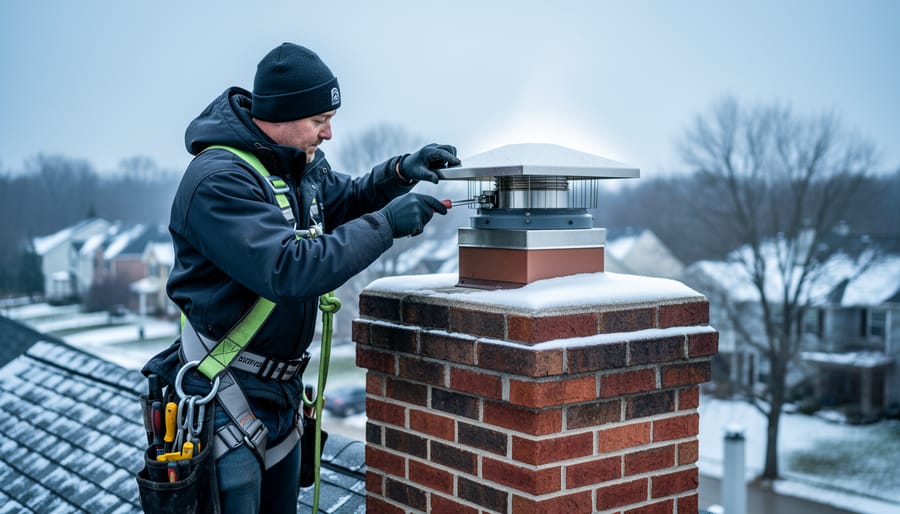
Schedule a professional chimney inspection with Mason Chimney Repair or qualified specialists to identify heat loss points, structural gaps, and deteriorating mortar that force your heating system to work harder. Your chimney might be silently draining hundreds of dollars annually from your energy budget while compromising indoor comfort.
Seal compromised flue liners and repair cracked masonry immediately, as damaged chimneys create draft problems that pull heated air from living spaces while allowing cold air infiltration. Modern energy-efficient repairs incorporate thermal barriers, insulated caps, and properly fitted dampers that maintain airtight seals when fireplaces aren’t in use.
Replace outdated chimney components with high-performance alternatives designed for thermal efficiency. Top-sealing dampers reduce energy waste by 90% compared to traditional throat dampers, while insulated chase covers prevent heat escape through metal chimneys common in newer homes.
Address hidden efficiency problems like inadequate chimney height, improper flashing, and missing chimney crowns that create negative pressure zones. These structural deficiencies force HVAC systems into constant operation, increasing carbon footprints alongside utility bills.
Understanding the connection between chimney condition and whole-home energy performance transforms routine maintenance into strategic investment. Energy-efficient chimney repair goes beyond fixing visible damage by optimizing thermal performance, reducing environmental impact, and delivering measurable cost savings. Homeowners who prioritize these specialized services typically see heating cost reductions of 15-30% while extending chimney lifespan and improving indoor air quality through proper ventilation management.
The Hidden Energy Drain in Your Chimney
Where Your Warm Air Actually Goes
Your home’s heated air doesn’t simply vanish into thin air—it escapes through specific, identifiable pathways in your chimney system. Understanding where these thermal leaks occur is the first step toward addressing energy waste that drives up heating bills and undermines your home’s environmental footprint.
The stack effect is the primary culprit behind chimney-related heat loss. This natural phenomenon occurs when warm indoor air rises through your chimney like an invisible elevator shaft, creating negative pressure that pulls more heated air from your living spaces. Even when your fireplace isn’t in use, this continuous draft can account for 10-30% of your home’s total heat loss during winter months.
Cracked flue liners represent one of the most serious problem areas. These clay or metal liners create a protective barrier inside your chimney, but thermal expansion and contraction cause deterioration over time. When cracks develop, they create direct channels for warm air to escape into the masonry and ultimately outside. In a real-world assessment of a 1950s colonial home in Vermont, thermographic imaging revealed that cracked flue tiles were responsible for heat loss equivalent to leaving a window open 24/7.
Deteriorated mortar joints between chimney bricks create additional escape routes. As mortar ages and weathers, it develops gaps and voids that allow warm air infiltration into the chimney structure itself. These compromised joints also permit cold air penetration, creating uncomfortable drafts throughout your home.
Damaged chimney caps fail to prevent downdrafts and allow precipitation to enter your system, accelerating deterioration while compromising thermal performance. Meanwhile, poorly sealed dampers—those metal doors inside your fireplace—rarely create an airtight seal when closed. Traditional dampers often warp or corrode, leaving gaps that permit continuous air exchange even when you’re not using your fireplace.
The Real Cost of Ignoring the Problem
A recent three-year study tracking 150 homes across the Northeast reveals the substantial financial impact of neglected chimney maintenance. Properties with compromised chimney systems lost an average of $847 annually through heating inefficiency—energy that literally escaped through cracks, deteriorated mortar joints, and poorly sealed flue systems.
One particularly compelling case involved a 1920s colonial home in Vermont. Before chimney restoration, thermal imaging documented heat loss equivalent to leaving a window open year-round. The homeowners spent $1,200 more annually on heating compared to similar properties. Following comprehensive energy-efficient repairs—including flue relining, mortar restoration, and damper replacement—their heating costs dropped 38% within the first year. This translates to roughly 2,400 pounds of avoided CO2 emissions annually, equivalent to removing one car from the road for three months.
The environmental dimension extends beyond individual homes. Researchers estimate that if just 30% of aging chimneys in cold-climate regions received proper energy-efficient repairs, the collective annual reduction would equal 450,000 tons of CO2—comparable to the carbon sequestration of 7.5 million tree seedlings over ten years.
These numbers matter because chimney deterioration compounds over time. What starts as minor mortar erosion becomes structural damage requiring complete rebuilds rather than targeted repairs. Homeowners who proactively address these issues not only reduce energy costs but also avoid capital expenses that typically run five to seven times higher than preventive maintenance investments.
What Makes a Chimney Repair ‘Energy-Efficient’
Modern Diagnostic Tools That Find Every Leak
Today’s chimney professionals have moved far beyond simple visual inspections, employing sophisticated diagnostic tools that reveal hidden energy leaks invisible to the naked eye. These technologies transform guesswork into precision, ensuring no efficiency problem goes undetected.
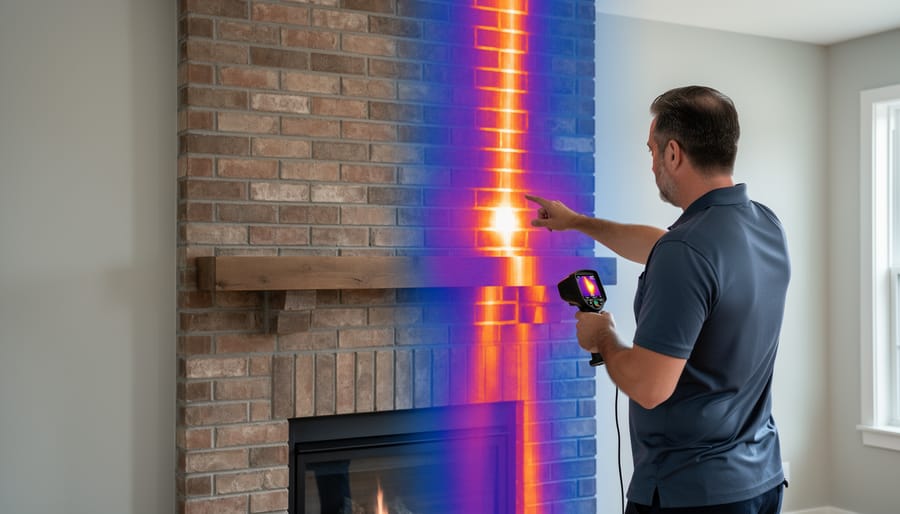
Thermal imaging cameras have revolutionized chimney diagnostics by capturing heat signatures throughout the entire structure. These devices display temperature variations in vivid color gradients, instantly highlighting areas where warm air escapes through cracks, deteriorated mortar, or improperly sealed dampers. During a recent assessment of a 1920s home in Portland, thermal imaging revealed heat loss equivalent to leaving a window open year-round, a problem completely invisible during traditional inspections. The homeowner reduced heating costs by 23% after targeted repairs addressed these specific weak points.
Smoke testing provides another layer of diagnostic clarity by introducing theatrical-grade smoke into the chimney system under controlled pressure. This technique makes air leakage paths immediately visible as wispy smoke streams emerge from compromised areas. The method proves particularly effective for identifying draft problems and hidden gaps in flue liners that allow combustion gases to seep into living spaces.
Progressive chimney services now integrate these assessments into comprehensive home energy audits, examining how chimney performance affects whole-house efficiency. This holistic approach considers factors like stack effect, air infiltration rates, and thermal bridging. By combining thermal imaging data with blower door tests and combustion analysis, technicians create detailed efficiency maps that prioritize repairs based on potential energy savings, giving homeowners clear return-on-investment projections before any work begins.
Sustainable Materials That Actually Perform
Modern chimney repairs no longer require choosing between environmental responsibility and long-term performance. Today’s eco-friendly materials deliver exceptional durability while supporting sustainable building practices that benefit both your home and the planet.
Low-VOC sealants represent a significant advancement in chimney maintenance. Unlike traditional masonry sealants that release harmful volatile organic compounds for months after application, these water-based alternatives cure quickly while maintaining superior adhesion and weather resistance. They effectively prevent moisture infiltration and air leakage without compromising indoor air quality, making them ideal for families concerned about chemical exposure.
Recycled metal components have transformed chimney cap and flashing repair. Manufacturers now produce chimney caps from reclaimed stainless steel and aluminum that match or exceed the lifespan of virgin materials. A recent project in Portland demonstrated this perfectly: a 1920s home received recycled metal flashing that not only diverted material from landfills but also provided a 50-year warranty, outlasting conventional options.
Insulated stainless steel chimney liners serve dual purposes in energy-efficient repairs. The insulation layer maintains higher flue temperatures, improving draft efficiency and reducing creosote buildup, while the corrosion-resistant inner liner extends system longevity. Homeowners typically notice immediate improvements in heating appliance performance and reduced fuel consumption.
Energy-efficient top-sealing dampers deserve special attention. These spring-loaded silicone gasket dampers install at the chimney crown, creating an airtight seal when closed. They eliminate the estimated 30 percent of heating and cooling loss that occurs through traditional throat dampers, often paying for themselves within two heating seasons through reduced energy bills while preventing downdrafts and keeping out wildlife year-round.
Essential Energy-Efficient Repair Techniques
Flue Liner Upgrades and Insulation
Upgrading your flue liner represents one of the most impactful energy-efficiency improvements you can make to your chimney system. Modern liner solutions address two critical functions simultaneously: they protect your chimney structure while dramatically improving thermal performance.
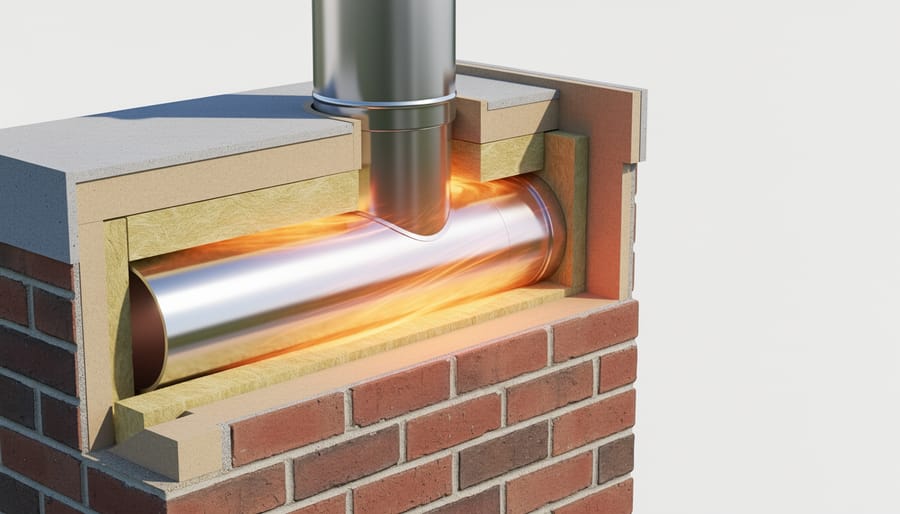
Stainless steel liner installation with insulation wrapping has become the gold standard for energy-conscious homeowners. These systems feature a flexible or rigid stainless steel tube surrounded by insulation blankets, creating a thermal barrier that keeps exhaust gases hotter as they travel upward. Hotter gases mean better draft, which translates to more complete combustion in your fireplace or heating appliance. This efficient venting reduces fuel consumption by 10-15% compared to uninsulated masonry flues. The insulation also prevents heat loss through chimney walls, keeping more warmth inside your living spaces where it belongs.
Cast-in-place liners offer an alternative approach with exceptional thermal properties. These systems involve pumping a cement-based insulating material around a rubber bladder, which creates a seamless, insulated flue when cured. The resulting liner provides superior insulation values and can rehabilitate deteriorating chimneys while improving energy performance.
Proper sizing is essential for maximizing efficiency. An oversized flue allows exhaust gases to cool too quickly, reducing draft and increasing creosote buildup. Professional assessment ensures your liner diameter matches your heating appliance’s output, maintaining optimal gas velocity and temperature. A well-sized, insulated liner can reduce heating costs by 20-30% annually while extending your chimney’s lifespan and improving indoor air quality through better ventilation control.
Advanced Sealing and Weatherproofing
Protecting your chimney from the elements while maintaining energy efficiency requires strategic upgrades to its most vulnerable components. Crown repair forms the foundation of this approach, using specialized weather-resistant materials like elastomeric coatings and polymer-modified concrete that flex with temperature changes rather than cracking. These modern formulations create a water-repellent barrier that prevents moisture infiltration, which can compromise both structural integrity and insulation performance.
Tuckpointing with thermal-efficient mortar addresses deteriorating joints between bricks while enhancing heat retention. Unlike standard mortar, thermal-efficient formulations incorporate insulating additives that reduce thermal bridging—the phenomenon where heat escapes through conductive materials. This seemingly small upgrade can reduce heat loss by 15-20% in older chimneys, translating to measurable energy savings during heating season.
Flashing improvements represent another critical intervention point. Modern stepped flashing systems using aluminum or copper paired with high-performance sealants create watertight transitions between chimney and roof. When properly installed, these systems prevent air leakage that forces heating systems to work harder, while simultaneously protecting against water damage that degrades insulation properties.
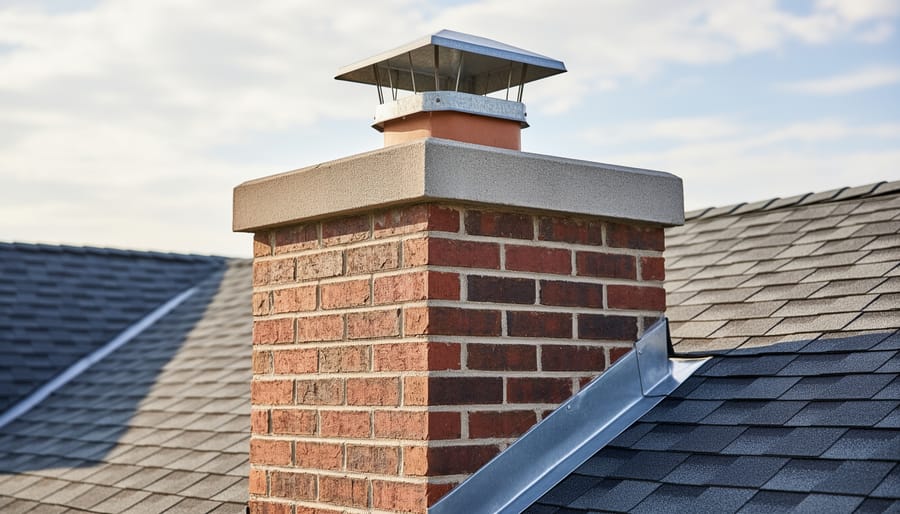
Chimney cap upgrades with integrated damper systems offer dual functionality. Top-sealing dampers create an airtight seal when your fireplace isn’t in use, eliminating the draft effect that pulls heated air up and out of your home. A documented case in Portland showed a homeowner reducing heating costs by 18% annually after installing a stainless steel cap with an integrated damper, demonstrating how this single upgrade delivers measurable returns while preventing downdrafts and wildlife entry.
Smart Damper Systems and Automation
Modern technology has transformed chimney efficiency through intelligent damper systems that automatically adjust airflow based on real-time conditions. Motorized dampers seal your chimney completely when the fireplace isn’t in use, preventing heated or cooled air from escaping through the flue—a common source of energy loss that can account for up to 30% of home heating costs. These systems integrate seamlessly with home automation systems, allowing homeowners to control dampers remotely via smartphone apps or voice commands.
Smart chimney caps equipped with sensors detect temperature changes, moisture levels, and draft conditions, automatically opening or closing to optimize performance. When connected to your home’s central automation platform, these devices communicate with your HVAC system to prevent simultaneous heating and venting, maximizing energy retention.
Real-world applications demonstrate significant savings. A Minneapolis homeowner reduced annual heating costs by 22% after installing automated dampers that sync with their programmable thermostat. The system closes dampers during peak heating hours and opens them only when the fireplace is active, eliminating the guesswork from manual operation. For architects designing sustainable homes, these automated solutions provide verifiable energy performance improvements while maintaining the aesthetic appeal of traditional fireplaces.
Real-World Results: Case Studies in Energy Savings
Real-world examples provide the clearest picture of how energy-efficient chimney repairs translate into actual savings. Here are two detailed case studies that demonstrate the measurable benefits homeowners have experienced.
Case Study 1: Victorian Home in Portland, Oregon
A 2,400-square-foot Victorian home built in 1892 faced escalating heating costs despite recent furnace upgrades. The homeowners noticed drafts near their brick chimney and hired specialists to conduct a comprehensive assessment.
The inspection revealed significant problems: missing mortar joints, a deteriorated clay flue liner with multiple cracks, and no chimney damper. These issues allowed heated air to escape continuously while drawing cold outdoor air into the home.
The repair solution included complete tuckpointing of exterior brickwork, installation of a stainless steel insulated liner system, addition of a top-sealing damper, and application of a breathable masonry water repellent. Total investment: $4,850.
Results over the following 12-month period were impressive. Natural gas consumption decreased by 18 percent compared to the previous year, accounting for weather variations using heating degree day calculations. The homeowners saved approximately $520 annually on heating costs, creating a payback period of 9.3 years. Beyond energy savings, they reported improved indoor comfort with fewer drafts and more consistent temperatures throughout the home.
Case Study 2: Mid-Century Ranch in Boulder, Colorado
A 1,800-square-foot ranch home with an original masonry fireplace and chimney experienced ice damming on the roof near the chimney structure each winter, signaling significant heat loss. Energy bills had increased 30 percent over five years despite no major lifestyle changes.
Thermal imaging revealed the uninsulated chimney chase acted as a thermal bridge, conducting heat directly from the home’s interior to the exterior. The single-wall flue liner provided minimal insulation value.
The comprehensive repair included installing a high-performance insulated chimney liner, sealing the chimney chase with spray foam insulation rated at R-30, replacing the deteriorated chimney cap, and installing a lock-top damper with a silicone seal.
The investment totaled $3,200. Within the first heating season, the homeowners documented a 22 percent reduction in natural gas usage through utility bill analysis. Annual savings reached $615, yielding a payback period of 5.2 years. The ice damming issue completely resolved, and attic temperatures near the chimney dropped by 12 degrees Fahrenheit during winter months, indicating successful thermal bridge elimination.
Both case studies demonstrate that energy-efficient chimney repairs deliver quantifiable returns while improving home comfort and structural integrity.
How to Choose an Energy-Focused Chimney Service
Certifications and Credentials That Matter
When selecting an energy-efficient chimney repair service, verifying professional credentials ensures you’re working with qualified experts who understand both structural integrity and thermal performance. The most recognized certification is from the Chimney Safety Institute of America (CSIA), which demonstrates comprehensive knowledge of chimney systems, safety standards, and modern repair techniques. CSIA-certified professionals undergo rigorous training and must pass detailed examinations covering everything from masonry restoration to proper ventilation.
For energy-specific expertise, look for Building Performance Institute (BPI) certification. BPI-certified professionals are trained in whole-house energy analysis and understand how chimney systems interact with your home’s overall thermal envelope. They can identify issues like excessive air leakage through the chimney chase or inadequate insulation that traditional chimney sweeps might overlook.
Green building credentials add another layer of expertise. LEED accreditation (Leadership in Energy and Environmental Design) or certifications from green building programs indicate familiarity with sustainable materials and energy-conscious repair methods. These professionals can recommend eco-friendly solutions like recycled flue liners or low-emission sealants that reduce environmental impact while improving performance.
When interviewing potential service providers, ask about their specific training in energy auditing and thermal imaging. Real-world application of these certifications means contractors who can diagnose hidden problems, provide data-backed recommendations, and deliver measurable energy savings alongside structural repairs.
Questions Every Homeowner Should Ask
Before hiring a chimney repair service, ask about their energy assessment methods. How do they evaluate your chimney’s current thermal performance? Request information about diagnostic tools like thermal imaging cameras or draft testing equipment that reveal heat loss patterns. Inquire about their material recommendations and why specific options suit your climate and home design. For instance, what insulation values do their preferred flue liners provide, and how do these compare to industry standards?
Understanding performance guarantees is essential. Will they provide measurable improvements in heating efficiency? Ask for specific metrics rather than vague promises. Question how their repairs integrate with whole-home energy strategies, particularly if you’re planning broader weatherization projects or working with architects on comprehensive renovations.
Request references from previous projects with similar scope and detailed explanations of their approach to balancing historical preservation with modern efficiency standards. Finally, ask about maintenance protocols post-repair. What ongoing care ensures sustained energy performance? These questions help identify contractors who understand the intersection of structural integrity and thermal efficiency, ensuring your investment delivers both safety and measurable energy savings.
Integrating Chimney Repairs Into Whole-Home Energy Retrofits
Chimney repairs shouldn’t exist in isolation from your broader home performance strategy. When planning energy retrofits, addressing your chimney system alongside insulation, HVAC upgrades, and air sealing creates compounding efficiency benefits that exceed the sum of individual improvements.
The optimal timing for chimney repairs occurs during comprehensive retrofit projects when contractors already have access to critical building envelope areas. If you’re adding attic insulation, for example, that’s the ideal moment to seal chimney penetrations and install proper draft control devices. Similarly, when upgrading heating systems, evaluate whether your existing chimney flue is appropriately sized for new high-efficiency equipment. Oversized flues reduce draft efficiency and promote condensation problems that accelerate deterioration.
Coordination between trades prevents redundant work and missed opportunities. A blower door test conducted during air sealing efforts will identify chimney-related leakage points that might otherwise go unnoticed. Your energy auditor can quantify heat loss through the chimney chase and prioritize repairs based on actual performance data rather than assumptions.
From a financial perspective, bundling chimney repairs with whole-home retrofits maximizes available incentives. Many utility rebate programs and federal tax credits reward comprehensive efficiency improvements rather than piecemeal upgrades. Some programs specifically target homes pursuing net-zero carbon goals, where eliminating all thermal bridges including chimney systems becomes essential.
Consider a recent Minnesota retrofit where homeowners combined chimney relining, air sealing, and HVAC replacement. By coordinating these improvements, they qualified for enhanced rebates totaling $4,200 and reduced their heating costs by 42 percent. The bundled approach also minimized disruption, requiring only two weeks of coordinated work rather than multiple separate projects spanning months.
Working with an energy consultant or architect experienced in whole-house retrofits ensures your chimney improvements align with broader performance targets. They can model how various scenarios impact overall energy consumption and help prioritize investments for maximum return.
Energy-efficient chimney repair represents far more than a simple maintenance task. It’s a strategic investment that bridges environmental responsibility with tangible financial returns. Throughout this exploration of energy-efficient chimney services, we’ve seen how addressing thermal inefficiencies, air leakage, and structural deterioration directly impacts your home’s overall energy performance. The modern approach to chimney maintenance recognizes these structures as integral components of your building’s thermal envelope, not isolated vertical passages requiring occasional attention.
The evidence speaks clearly: homeowners who prioritize energy-conscious chimney repairs typically reduce heating costs by 15-30 percent while simultaneously decreasing their carbon footprint. These improvements compound over time, making the initial investment increasingly valuable as energy prices rise and environmental regulations tighten. Whether you’re retrofitting a historic masonry chimney with appropriate insulation or upgrading factory-built systems with better sealing mechanisms, each improvement contributes to a more sustainable, comfortable living environment.
As you consider your chimney’s condition, shift your perspective from reactive repairs to proactive building performance optimization. Seek professionals who understand thermal dynamics, conduct thorough diagnostic assessments using modern technology, and recommend solutions that address root causes rather than symptoms. By integrating energy efficiency into your chimney maintenance strategy, you’re not just preserving a functional structure—you’re enhancing your home’s resilience, reducing operational costs, and contributing to broader sustainability goals. This holistic approach transforms chimney repair from an occasional necessity into a cornerstone of responsible homeownership.