
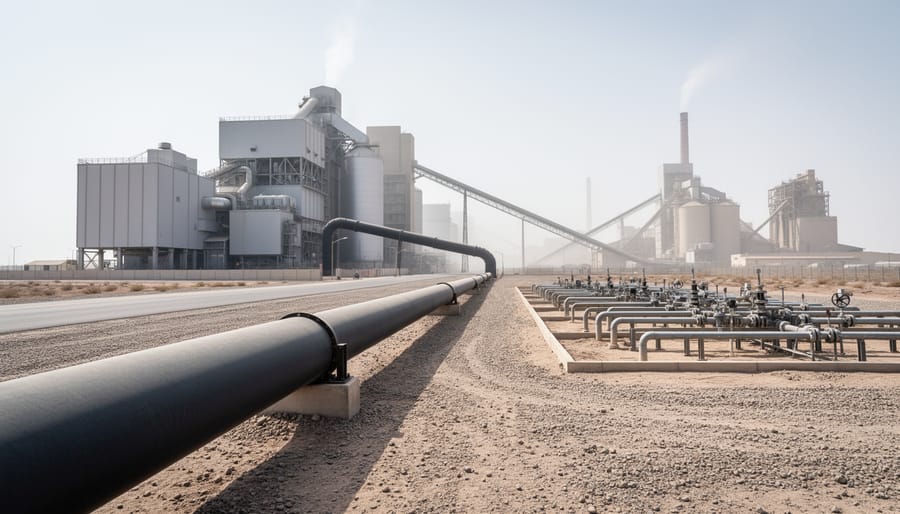
CCS construction refers to the specialized design and build process for carbon capture and storage facilities, infrastructure capable of intercepting industrial CO2 emissions before they reach the atmosphere and transporting them to secure geological storage sites. These aren’t typical building projects. They require pipeline networks, capture plants integrated with existing industrial facilities, and injection wells drilled thousands of feet into rock formations, all engineered to handle carbon dioxide at scale.
The construction industry is paying attention because decarbonization regulations are tightening across major economies, and hard-to-abate sectors like cement, steel, and chemical manufacturing need immediate solutions. Traditional efficiency upgrades can only go so far. CCS infrastructure offers these industries a pathway to continue operations while meeting emissions targets, which explains why project announcements have accelerated since 2024.
For architects and construction professionals, CCS represents a new category of work that intersects industrial engineering with sustainable infrastructure. The Padeswood Cement Works project in North Wales provides a tangible example: a full-scale carbon capture retrofit at an operational cement plant, designed to capture emissions directly from the manufacturing process. Projects like this demonstrate that CCS construction is moving beyond pilot programs into commercial deployment.
Understanding CCS construction matters now because it’s becoming integrated into broader discussions about eco-friendly buildings and sustainable design. Material suppliers serving green building markets are exploring carbon capture at production facilities. The concrete you specify for a net-zero project might soon come from a plant equipped with capture technology, making CCS part of the supply chain conversation rather than a distant industrial concern.
What CCS Construction Actually Means
CCS construction refers to the specialized building of infrastructure designed to capture carbon dioxide emissions from industrial sources, compress and transport the gas, then permanently store it deep underground. Unlike conventional industrial construction, these projects integrate chemical engineering facilities, high-pressure pipeline networks, and geological storage sites into a single coordinated system.
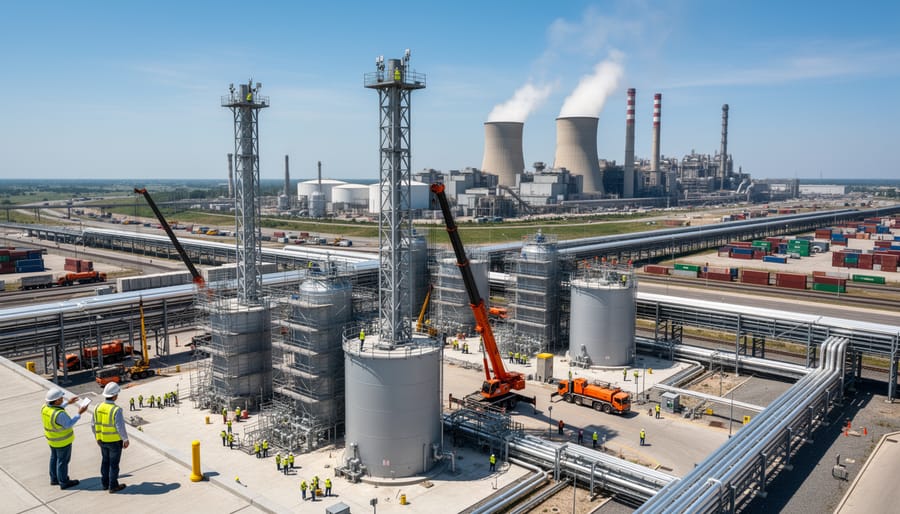
The process involves three distinct construction phases, each with unique requirements. First, capture facilities are built at emission sources, typically power plants, cement factories, or heavy manufacturing sites, where specialized equipment separates CO2 from exhaust streams. Second, transport infrastructure connects these capture points to storage locations, often requiring miles of specially designed pipelines capable of handling compressed CO2. Third, injection and monitoring sites are constructed at geological formations suitable for permanent carbon storage.
- Carbon capture
- The process of separating CO2 from industrial exhaust gases using chemical solvents or physical filters before it enters the atmosphere. This equipment is typically integrated directly into existing facility operations.
- Compression facilities
- Stations that pressurize captured CO2 into a dense, fluid-like state for efficient transport through pipelines. These facilities require robust structural design to handle high-pressure operations safely.
- Transport infrastructure
- Dedicated pipeline networks built to move compressed CO2 from capture sites to storage locations. These differ from conventional pipelines in their corrosion resistance requirements and pressure specifications.
- Geological storage
- Deep underground rock formations, typically saline aquifers or depleted oil and gas reservoirs, where CO2 is permanently injected and sealed. Site selection requires extensive geological assessment to ensure long-term containment.
- Sequestration
- The permanent isolation of captured carbon underground, preventing its release into the atmosphere. Monitoring systems are built to verify the CO2 remains securely stored over decades.
What sets CCS construction apart is the integration challenge. Builders must coordinate across multiple engineering disciplines simultaneously, often retrofitting capture systems onto operational facilities without disrupting production. The construction timeline requires careful phasing to minimize operational downtime while ensuring each component, from capture to storage, functions as part of an integrated system rather than standalone infrastructure.
Why CCS Construction Projects Are Gaining Momentum
Regulatory Frameworks Shaping Construction Standards
Government policies are reshaping how CCS facilities are designed and built, translating emission targets into concrete construction specifications. Canada’s proposed Clean Electricity Regulations illustrate this shift. The regulations would enforce a 30 tCO2 per GWh limit on annual carbon emission intensity for power generation facilities, effectively mandating carbon capture integration for any new gas-fired plants or existing ones continuing operation beyond their exemption periods.
For construction teams, this creates distinct requirements. Facilities must allocate space for capture equipment from the initial design phase rather than retrofitting later. Site layouts need accommodation for CO2 compression units, solvent regeneration systems, and pipeline connections to transport captured carbon. The regulatory threshold determines capture efficiency targets, which in turn dictates the scale and complexity of the infrastructure being built.
Similar regulatory frameworks are emerging across jurisdictions, each setting performance standards that influence everything from foundation engineering to equipment procurement. A power plant designed to meet stringent emission limits requires fundamentally different construction planning than one built without capture obligations. These regulations don’t just encourage CCS adoption, they define the technical parameters construction professionals must work within, making regulatory compliance inseparable from project design and execution.
Industry Sectors Leading the Adoption
Cement manufacturing, power generation, and heavy industrial facilities are at the forefront of CCS construction adoption because these sectors face intense pressure to reduce emissions while maintaining operational capacity. Cement plants, which produce substantial CO2 as an inherent byproduct of the chemical process, cannot easily switch fuels or processes, making carbon capture a practical decarbonization path. Power generation facilities, particularly those burning fossil fuels, are integrating CCS to meet emission intensity limits while maintaining grid reliability during the transition to renewable sources.
Heavy manufacturing operations, including steel production, chemical plants, and refineries, are pursuing CCS construction because these processes generate concentrated CO2 streams that are technically well-suited for capture. The Padeswood CCS project, where Heidelberg Materials has signed the engineering, procurement and construction management agreement, exemplifies how cement producers are moving from planning to active construction. These industries share a common characteristic: they produce high-volume, predictable emissions from large point sources, which makes capturing and transporting CO2 more economically viable than trying to offset emissions through other means.
Real-World CCS Construction in Action
Looking at CCS construction as it actually unfolds today, the Padeswood CCS project stands out as one of the most concrete demonstrations of how carbon capture infrastructure moves from concept to physical reality. Heidelberg Materials has signed the engineering, procurement and construction management agreement for this facility, marking a significant step forward in translating carbon capture ambitions into built infrastructure. Rather than speculating about what might happen, this project shows what’s happening now: a major industrial company committing resources to construct the physical systems that will separate, compress, and prepare carbon dioxide for permanent storage.
The Padeswood project represents the kind of construction activity that will become more common as emission regulations tighten. Canada’s proposed Clean Electricity Regulations, which would limit annual carbon emission intensities to 30 tonnes of CO2 per gigawatt-hour, illustrate the regulatory context pushing companies toward CCS infrastructure. While Padeswood itself operates in a different regulatory environment, the project reflects a broader pattern: industries facing carbon constraints are building capture facilities rather than simply planning them.
What makes projects like Padeswood valuable as sustainable examples isn’t their novelty but their demonstration of feasibility. These aren’t experimental facilities with uncertain outcomes; they’re industrial construction projects with defined scopes, contracted builders, and specific capture objectives. The engineering, procurement and construction management agreement signals that the project has moved past preliminary design into the execution phase where materials get ordered, equipment gets fabricated, and concrete gets poured.
For anyone tracking CCS construction, active projects reveal practical realities that design documents never capture fully. They show how capture equipment integrates with existing operations, where construction sequencing becomes critical, and which aspects of the work require specialized contractors versus conventional industrial builders. The Padeswood construction provides visibility into how these facilities actually get built, offering lessons that will inform subsequent projects as carbon capture infrastructure expands across energy-intensive industries.
The Unique Construction Challenges of CCS Facilities
Site Planning and Geological Assessment
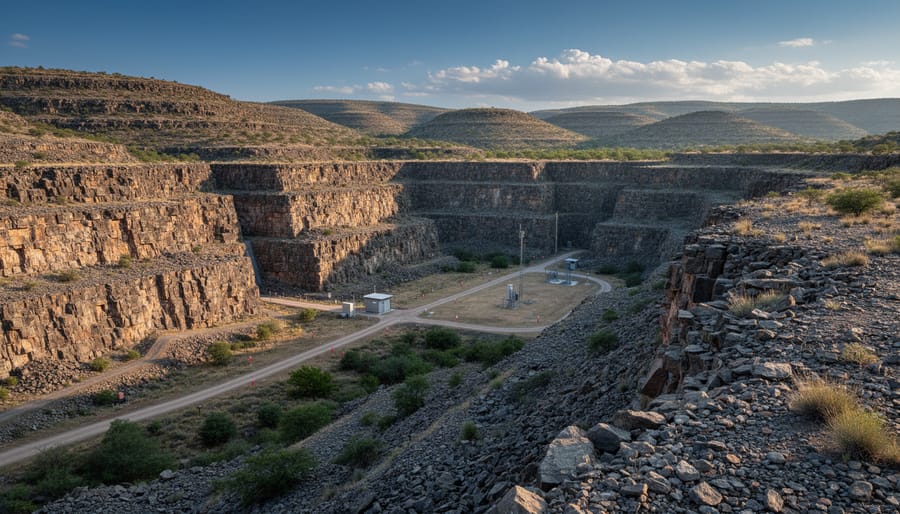
Successful CCS construction begins with thorough site evaluation long before ground breaks. Geological conditions determine whether a location can safely store captured carbon dioxide for the long term. Subsurface rock formations must possess the right characteristics to contain CO2 securely, preventing migration back to the surface. This assessment involves extensive surveying and analysis to identify suitable storage zones.
Proximity matters significantly in project planning. Facilities benefit from being reasonably close to major emission sources, reducing the complexity and extent of transport infrastructure needed to move captured carbon. However, this geographic consideration must balance against geological suitability. Sometimes the ideal storage formation lies at a distance from the emission source.
Transport infrastructure becomes the connecting tissue of any CCS project. Pipeline routes, access roads, and construction staging areas all require careful planning to minimize environmental impact while ensuring practical functionality. Existing transportation networks can reduce construction demands, but many projects require purpose-built infrastructure to link capture facilities with storage sites.
The interplay between these three factors, geological suitability, source proximity, and transport infrastructure, shapes every CCS construction project from its earliest planning stages. Each variable influences the others, requiring integrated analysis rather than isolated assessment of individual components.
Integrating Capture Technology with Existing Operations
Most CCS construction projects don’t start with a blank slate. Instead, capture systems are integrated into power plants, cement kilns, or manufacturing facilities that have operated for decades. This retrofit approach presents distinct challenges that traditional new-build projects rarely encounter.
Construction teams must maintain production continuity while installing capture equipment, compression units, and transport infrastructure. Shutdowns get scheduled around operational windows, with some installations requiring years of phased work to avoid disrupting energy supply or manufacturing output. The Padeswood CCS project, where Heidelberg Materials coordinates engineering, procurement and construction management, exemplifies this delicate balance of adding carbon capture capability to an active cement operation.
Spatial constraints often dictate creative solutions. Existing facilities weren’t designed with CCS in mind, so capture equipment competes for limited space with electrical systems, fuel handling infrastructure, and routine maintenance access. Engineers must route new piping through crowded industrial sites while preserving safety clearances and operational flow.
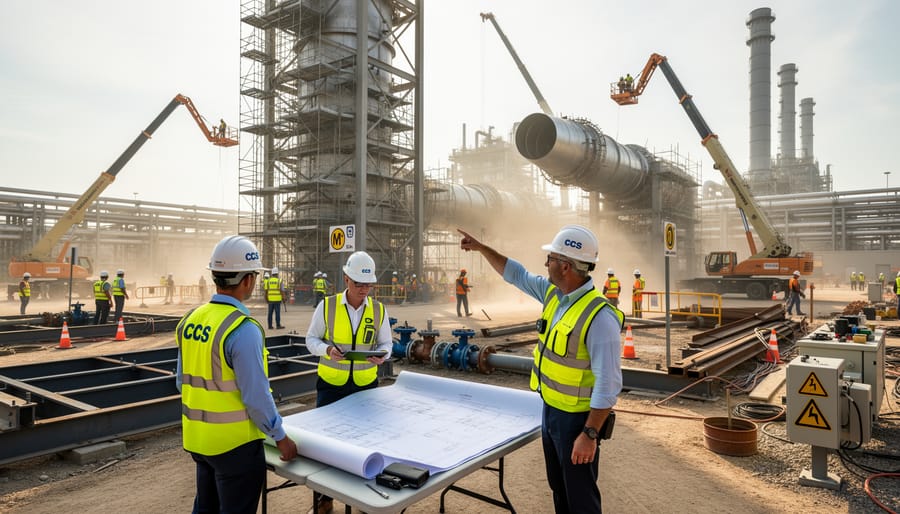
Coordination between multiple disciplines becomes critical. Mechanical contractors installing capture units work alongside electrical teams upgrading power systems, civil engineers reinforcing foundations, and operations staff managing daily production. Miscommunication or poor sequencing can idle entire facilities, making project management and stakeholder alignment as important as technical execution.
This complexity explains why CCS construction timelines and costs vary widely based on site-specific conditions rather than following a standard template.
What Architects and Builders Should Know About CCS Projects
For architects and builders accustomed to traditional construction projects, CCS facilities present a distinct set of challenges that require new frameworks for collaboration and project management. These projects demand interdisciplinary coordination from the earliest planning stages, bringing together geologists, chemical engineers, environmental specialists, and construction teams in ways that differ from standard building workflows.
The project lifecycle typically begins with extensive feasibility studies and geological assessments before any construction work commences. Unlike conventional builds where site characteristics primarily affect foundation design, CCS projects require detailed subsurface analysis to verify storage capacity and containment integrity. This front-loaded engineering phase shapes every subsequent decision, from pipeline routing to above-ground facility placement.
Key considerations for construction professionals entering this field include:
- Project scoping that accounts for both surface construction and subsurface infrastructure requirements
- Coordination among multiple specialist teams, including capture technology vendors and storage operators
- Regulatory compliance across environmental, safety, and emission reduction frameworks
- Long-term monitoring infrastructure integrated into initial construction plans
The construction phase itself involves specialized equipment installation that must be precisely calibrated with existing industrial operations. Builders working on retrofit projects face the added complexity of maintaining operational continuity while integrating new capture systems, requiring careful sequencing and temporary modifications.
For professionals experienced in sustainable building practices, CCS construction shares conceptual parallels with other low-carbon infrastructure. The same attention to energy efficiency that drives Passivhaus energy savings in residential design applies to optimizing CCS facility operations. Similarly, the systems-thinking approach used in public building design translates well to planning facilities that must perform reliably across decades.
What distinguishes CCS construction is the scale of regulatory oversight and the technical specificity required throughout. Every component must meet stringent safety standards while delivering measurable emission reductions that satisfy frameworks like Canada’s proposed Clean Electricity Regulations, which limit annual carbon emission intensities to 30 tonnes of CO2 per gigawatt-hour.
The Future Outlook for CCS Construction
CCS construction is poised for continued expansion as emission reduction commitments drive infrastructure investment across energy-intensive sectors. Projects like Padeswood demonstrate that the engineering and construction expertise needed to deliver these facilities is already being deployed at scale. The trajectory through 2026 and beyond will likely see more cement producers, power generators, and industrial manufacturers incorporating carbon capture into their facility planning as regulatory frameworks tighten.
The proposed Clean Electricity Regulations in Canada, which would limit annual carbon emission intensities to 30 tonnes of CO2 per gigawatt-hour, illustrate how policy measures create concrete construction demand. Similar regulatory approaches in other jurisdictions will continue shaping where and how CCS facilities are built, with compliance timelines influencing project schedules across multiple regions.
Scaling challenges remain tangible. Each CCS facility requires substantial site preparation, specialized equipment integration, and coordination with geological storage infrastructure that may be dozens of kilometers away. Construction professionals entering this field will need to adapt traditional project management approaches to accommodate the unique phasing requirements of retrofit installations and the interdisciplinary nature of capture system commissioning.
CCS construction fits into the clean energy transition alongside renewable infrastructure development. Just as understanding wind energy impact requires examining both benefits and trade-offs, CCS represents one tool among several for decarbonizing sectors where electrification isn’t immediately feasible. The construction industry’s role is delivering these facilities on time and to specification, enabling emission reductions that complement rather than replace renewable energy deployment. Opportunities will emerge for firms capable of managing complex industrial retrofits, understanding geological engineering requirements, and coordinating across multiple technical disciplines simultaneously.
CCS construction marks a practical step forward in building infrastructure that addresses industrial emissions at their source. While renewable energy systems handle electricity generation, CCS facilities tackle emissions from processes that currently lack viable alternatives, making them a complementary piece of the decarbonization puzzle rather than a competing solution.
For homeowners watching sustainability trends, CCS construction signals that emission reduction strategies are moving beyond individual buildings into industrial-scale infrastructure. The momentum behind projects like Padeswood demonstrates that carbon capture is transitioning from concept to concrete reality, with real construction contracts and regulatory frameworks taking shape.
Construction professionals should monitor regulatory developments, particularly emission intensity standards that will shape facility requirements. The specialized nature of CCS projects demands collaboration across geological, mechanical, and civil engineering disciplines. As more facilities break ground, opportunities will expand for builders with relevant experience in industrial retrofits and complex integration work.
The field remains in its early growth phase. Watch for evolving construction standards, lessons learned from initial projects, and how regulatory frameworks develop in different regions. CCS construction represents one tool among many for reducing emissions, most effective when deployed strategically alongside energy efficiency improvements, renewable installations, and operational changes across carbon-intensive industries.