
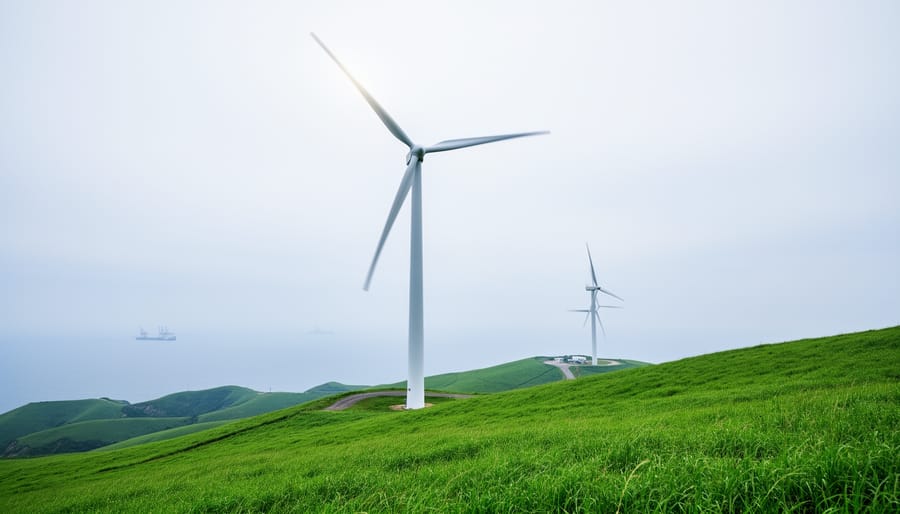
Wind turbines spinning across hillsides and offshore platforms have become iconic symbols of clean energy, yet their environmental footprint extends beyond the promise of zero emissions. Understanding these impacts matters now more than ever as wind installations have grown to power roughly 12% of U.S. electricity demand in 2026, with architects increasingly incorporating turbine systems into eco-friendly buildings and community developments.
The environmental conversation around wind energy reveals a complex balance sheet. On one side sits the substantial benefit: a single 2.5-megawatt turbine prevents approximately 4,800 tons of carbon dioxide emissions annually compared to coal-fired generation. Yet wildlife biologists document hundreds of thousands of bird and bat deaths each year from turbine collisions, with golden eagles and endangered species facing particular risk in poorly planned installations.
Sound propagation from turbine operations creates measurable impacts within 1,000 feet of installations, affecting both human residents and terrestrial wildlife patterns. Habitat fragmentation occurs during construction phases, particularly in ridge-top and offshore locations where access roads and transmission infrastructure alter migration corridors and nesting grounds.
The picture shifts dramatically based on project planning. Modern radar-assisted shutdown systems reduce bat mortality by 82% during high-activity periods. Strategic siting protocols that avoid flyways and critical habitats have cut avian deaths by half in California’s Altamont Pass after retrofitting older installations. Offshore projects demonstrate that proper environmental assessments during site selection prevent most negative impacts before concrete gets poured.
For homeowners considering residential turbines or architects specifying wind systems for developments, these environmental considerations directly influence permitting requirements, community acceptance, and long-term project viability. This guide examines each environmental impact category with current data, presenting practical mitigation strategies that make wind energy both cleaner and genuinely sustainable.
The Environmental Benefits of Wind Energy
Wind energy delivers measurable environmental advantages that make it a compelling choice for architects and developers pursuing sustainable building projects. Unlike fossil fuel power plants, wind turbines generate electricity without burning fuel, which means they produce no direct greenhouse gases during operation. This zero-emission profile translates to significant carbon footprint reductions over a turbine’s 20-to-30-year lifespan, particularly when compared to the lifecycle greenhouse gas emissions of coal and natural gas facilities.
The air quality benefits extend beyond climate considerations. Wind installations eliminate the sulfur dioxide, nitrogen oxides, and particulate matter that conventional power plants release into the atmosphere. For projects near urban centers or sensitive populations, integrating wind energy can support healthier local air quality while meeting renewable energy targets.
Water conservation represents another critical advantage. Traditional thermal power generation consumes enormous volumes of water for cooling, creating supply pressures in drought-prone regions. Wind turbines require minimal water, primarily for occasional blade cleaning and maintenance. Research examining the wind power water nexus confirms these operational water savings, making wind particularly valuable in water-stressed areas where sustainable architecture must address multiple resource constraints simultaneously.
For architects working toward net-zero buildings in 2026, these environmental benefits align directly with aggressive carbon reduction goals. Wind energy’s emission-free generation helps projects achieve the deep decarbonization that net-zero strategies require, whether through on-site turbines for larger developments or off-site renewable energy contracts. When evaluated purely on climate and resource conservation metrics, wind energy stands as one of the cleanest electricity sources available for sustainable building applications.
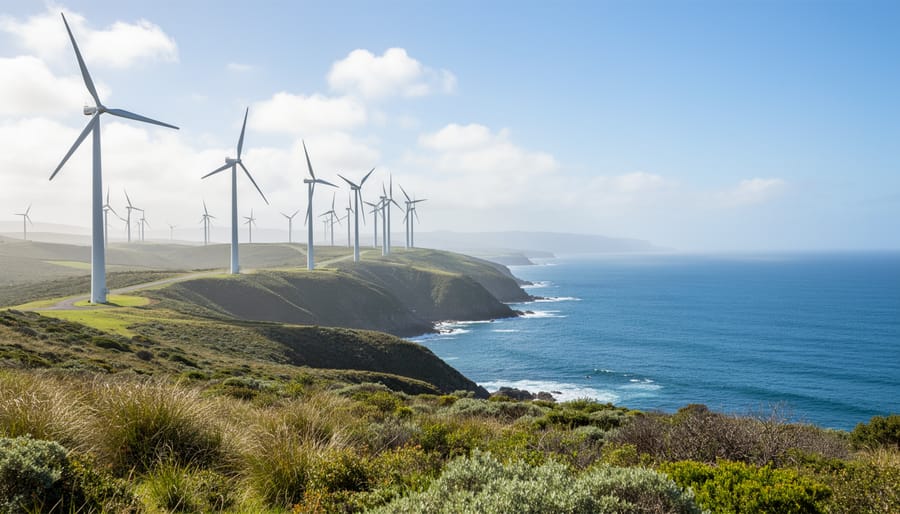
Wildlife Impacts: Understanding the Collision Risk
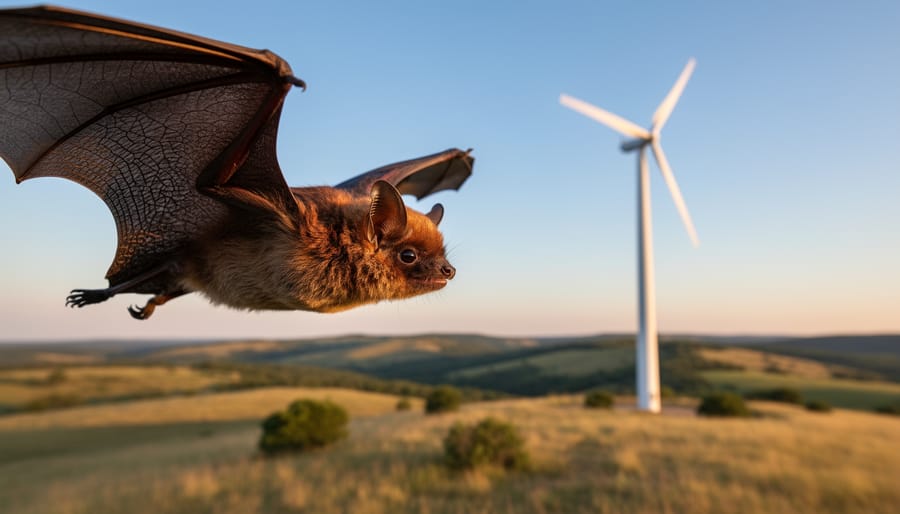
Birds and Bats at Risk
Collision mortality represents the most significant threat wind turbines pose to flying wildlife. Raptors, including eagles, hawks, and vultures, face particularly high risk because they hunt and soar at rotor-sweep heights, often focusing on prey below rather than scanning for turbine blades. Golden eagles and red-tailed hawks experience elevated collision rates at facilities built along ridge lines and in open grasslands where these species concentrate.
Bats suffer disproportionate losses compared to their population sizes. Migratory tree-roosting species like hoary bats, eastern red bats, and silver-haired bats account for the majority of bat fatalities across North American wind facilities. These species migrate along routes that often intersect with wind development corridors, and they’re drawn to turbines during late summer and fall migration periods. Unlike birds, many bats die from barotrauma, rapid pressure changes near spinning blades that cause fatal internal injuries, even without direct strikes.
The severity of birds and bats impacts varies considerably by location, season, and turbine design. Coastal and ridge-top sites positioned along migratory flyways typically record higher mortality than interior lowland locations. For architects planning integrated wind systems in 2026, understanding local species presence and movement patterns during site assessment proves essential to responsible renewable energy implementation.
Marine Wildlife Considerations for Offshore Wind
Offshore wind installations introduce a distinct set of concerns for ocean ecosystems that coastal architects and developers must evaluate during project planning. Marine mammals represent the highest-risk group, with construction activities and operational turbine noise potentially disrupting communication, navigation, and feeding behaviors in whales, dolphins, and seals. The low-frequency sounds generated during pile-driving operations can travel vast distances underwater, affecting species that rely on echolocation and acoustic signaling for survival.
Research confirms that marine mammals and offshore impacts demand particular attention in offshore wind development, especially during sensitive breeding and migration periods. These installations can also alter seafloor habitats where foundation structures are anchored, potentially affecting benthic communities and the fish species that depend on them. Changes in local water movement patterns around turbine bases may shift sediment distribution and create artificial reef effects that some species colonize while others avoid.
For coastal sustainable development projects considering offshore wind integration, the trade-offs become complex. While these installations eliminate onshore habitat disruption and reduce visual impact from populated areas, they transfer environmental costs to marine ecosystems we understand less completely. Timing construction to avoid critical migration windows, selecting turbine foundation designs that minimize seafloor disturbance, and establishing baseline marine life surveys before installation can reduce harm without abandoning the renewable energy benefits these systems provide.
Noise Pollution and Its Effects on Wildlife
Wind turbines generate two types of sound: mechanical noise from gearboxes and generators, and aerodynamic noise from blades slicing through air. For animals relying on auditory cues to find prey, avoid predators, or communicate with their group, this constant background hum represents more than mere annoyance. Research demonstrates that wind turbine noise harms crucial biological functions across multiple species, particularly in areas where turbines operate within close range of natural habitats.
Ground-dwelling mammals experience some of the most pronounced disruption. Species such as deer, elk, and smaller mammals like foxes use subtle acoustic signals to detect danger and locate food sources. Turbine noise masks these environmental sounds, forcing animals to spend more energy on vigilance and less on foraging or resting. Studies show that certain mammals actively avoid areas within several hundred meters of operating turbines, effectively reducing available habitat even when physical structures leave the landscape largely intact.
Wind turbine noise can harm vital survival, social, and rearing mechanisms in certain species, fundamentally altering how animals interact with their environment.
For birds, acoustic interference creates navigation and communication challenges. Many songbird species rely on vocal signals for territory establishment and mate attraction. Turbine noise compresses their effective communication range, meaning males must sing louder or more frequently to convey the same information, a metabolic cost that can reduce breeding success. Species that nest near turbines may abandon otherwise suitable sites if noise levels exceed their tolerance thresholds.
The impact extends to critical life stages. Parent animals teaching young to recognize predator calls or coordinating group movements face heightened difficulty when turbine sound drowns out their vocalizations. Bat species using echolocation for navigation and hunting may find their sensory systems less effective in areas with significant turbine noise, compounding the collision risks they already face.
For architects and developers integrating wind energy into sustainable building projects, these acoustic impacts demand careful site assessment. Positioning turbines away from known wildlife corridors, nesting areas, or sensitive habitats reduces conflict. Understanding prevailing wind patterns and how sound propagates across specific terrain helps predict which areas will experience the most pronounced acoustic effects. In residential or commercial developments near natural areas, acoustic modeling during the planning phase can identify problematic placements before construction begins, balancing renewable energy goals with ecosystem protection.
Habitat Disruption for Ground-Dwelling Species
Wind turbine installations reshape ground-level habitats in ways that extend well beyond the turbine footprints themselves. When you plan a wind energy component for a sustainable building project, understanding these ground-level disruptions helps you anticipate how the infrastructure will interact with existing ecosystems and nearby natural areas.
The most immediate impact comes during construction. Access roads carved through previously undisturbed terrain fragment continuous habitat patches into smaller, isolated segments. Ground-dwelling species like prairie chickens, ground squirrels, and various reptiles rely on large, connected territories for foraging, breeding, and seasonal movements. When wind farm roads and turbine pads divide these areas, populations become isolated, reducing genetic diversity and limiting access to critical resources.
These fragmentation effects persist long after construction crews leave. A single turbine requires a cleared pad and permanent access route, typically spanning several acres when you account for crane staging areas and ongoing maintenance access. Multiply this footprint across a utility-scale wind farm, and the cumulative land disturbance can alter drainage patterns, soil composition, and native plant communities that ground-dwelling wildlife depends on.
The operational phase introduces subtler disruptions. Service vehicles traveling access roads create ongoing disturbance corridors that many ground-nesting birds and small mammals actively avoid, effectively rendering larger buffer zones around infrastructure unusable. Altered microclimates near turbine bases, changed predator-prey dynamics due to new sightlines, and invasive species introduced along disturbed corridors all compound habitat degradation.
For architects integrating smaller-scale wind systems into building sites, these impacts scale down but remain relevant. A single residential turbine still requires foundation work, equipment access, and maintenance clearance that can disrupt native ground cover and displace established wildlife populations. Thoughtful site selection that avoids critical habitat areas and minimizes new access routes helps reduce these ground-level consequences while still meeting renewable energy goals.
Land Use and Visual Impact Considerations
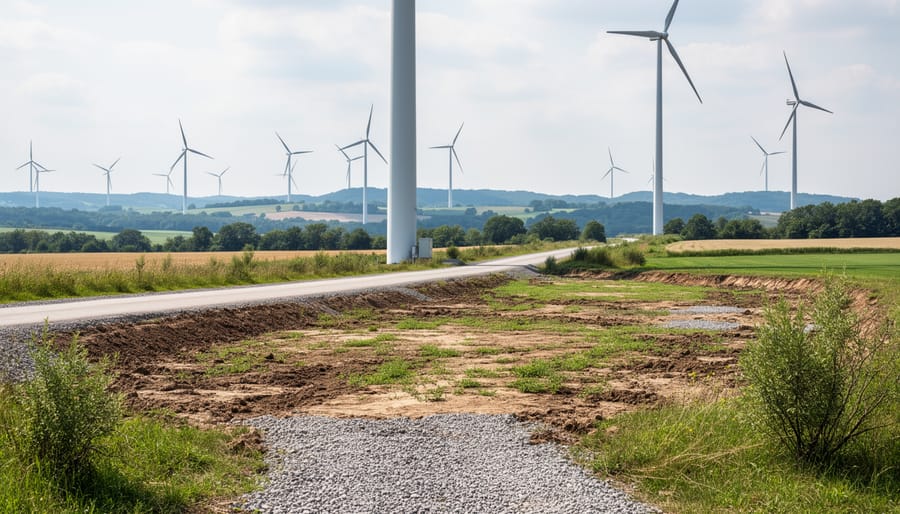
Wind farms require substantial land commitments that fundamentally reshape rural and coastal landscapes. A typical utility-scale installation occupies hundreds or thousands of acres, with individual turbines standing 260 to 500 feet tall and requiring cleared access roads, transmission infrastructure, and maintenance facilities. While the turbines themselves have a relatively small physical footprint, the supporting infrastructure fragments previously continuous landscapes and alters how people experience open spaces.
The visual impact presents a genuine challenge for architects and planners committed to landscape preservation. Turbines dominate viewsheds from miles away, particularly in flat terrain or coastal environments where unobstructed sightlines extend for considerable distances. What some observers view as symbols of progress, others perceive as industrial intrusions that diminish scenic quality and property values. This tension becomes especially acute in areas valued for natural beauty, historic character, or tourism-based economies.
Community acceptance often hinges on thoughtful integration rather than outright opposition to renewable energy. Architects working on projects that incorporate wind energy must engage early with stakeholders to address visibility concerns, consider alternative siting that preserves critical viewsheds, and explore design solutions like setback distances and vegetative screening where feasible. Some communities have successfully negotiated turbine placement through collaborative planning processes that balance clean energy goals with legitimate aesthetic concerns.
The land beneath turbines isn’t entirely lost to other uses. Agricultural activities like grazing and crop farming frequently continue around installations, and some wildlife species adapt to these altered environments. However, the permanent transformation of previously undeveloped land remains a real tradeoff that environmentally conscious architects must weigh against carbon reduction benefits when evaluating wind energy for 2026 sustainable building projects.
Mitigation Strategies for Environmentally Responsible Wind Integration
Responsible wind integration starts with strategic site selection, the single most powerful tool architects and developers have to reduce environmental harm. Choose locations away from migration corridors, nesting areas, and known bat hibernation sites. Conduct thorough pre-construction wildlife surveys across multiple seasons to identify high-risk zones. Offshore projects demand equally careful marine mammal assessments before finalizing placement. Avoiding sensitive habitats entirely eliminates conflicts that no amount of retrofitting can solve later.
Turbine design innovations offer meaningful reductions in collision mortality. Slower blade rotation speeds give birds and bats more time to detect and avoid strikes, though this slightly reduces energy output. Painting one blade black increases visibility for avian species, cutting collision rates by up to 70% in some documented installations. Ultrasonic deterrents emit sounds that discourage bats from approaching turbines during peak activity periods. Modern taller towers with larger rotors also reduce the number of turbines needed for equivalent output, shrinking the overall footprint.
Operational timing provides another layer of protection without permanent modifications. Program turbines to curtail or shut down during high-risk periods: dawn and dusk when bats feed most actively, or during seasonal migration peaks for vulnerable bird species. Weather-responsive systems can pause operations during low wind speeds when bats are most active but energy production drops anyway. These scheduling adjustments balance wildlife protection with practical energy generation, making them attractive sustainable building strategies for projects near ecologically sensitive areas.
Habitat restoration and offset programs address ground-dwelling species and ecosystem-level impacts. Replant native vegetation in disturbed areas immediately after construction wraps. Create or enhance habitat corridors that reconnect fragmented landscapes around wind infrastructure. Some developers establish conservation easements elsewhere to compensate for unavoidable habitat loss, though on-site restoration remains preferable. Ongoing monitoring programs track actual wildlife impacts post-installation, allowing adaptive management that responds to real-world conditions rather than predictions.
Collaborative approaches yield better outcomes than isolated technical fixes. Work with ornithologists, ecologists, and local wildlife agencies during planning phases, not after permits are denied. Community input identifies concerns about specific species or landscapes that desktop studies might miss. This integrated process, combining smart siting, proven technology, operational flexibility, and ecological partnerships, transforms wind energy from a potential threat into a component of genuinely sustainable architecture.
Making Informed Decisions: Wind Energy in Your Sustainable Building Project
Deciding whether to integrate wind energy into your project requires a careful, site-specific evaluation that balances renewable energy goals with ecosystem protection. Not every location is suitable for turbines, and forcing wind energy onto an environmentally sensitive site can undermine the sustainability you’re trying to achieve.
Start by conducting a thorough site assessment that examines both energy potential and ecological context. Measure average wind speeds at hub height, turbines typically need sustained speeds above 4 meters per second to generate meaningful power for residential or small commercial applications. Equally important is mapping nearby wildlife populations, migration corridors, and sensitive habitats. If your site lies within a known bird migration route or near bat roosting areas, the collision risk may outweigh the carbon reduction benefits.
Consider the broader energy strategy for your building. Wind works best as part of an integrated renewable energy system rather than a standalone solution. Passivhaus designs that dramatically reduce energy demand through superior insulation and airtightness may eliminate the need for on-site wind generation entirely. Solar arrays paired with battery storage often deliver comparable carbon reductions with lower wildlife impacts, particularly in suburban settings where turbine noise and visual impact raise community concerns.
| Site Characteristic | Environmental Factor | Wind Suitability |
|---|---|---|
| Open agricultural land, consistent wind | Low bird/bat activity, no migration paths | High, proceed with monitoring |
| Coastal or hilltop location | Seasonal migration corridor present | Moderate, require seasonal shutdowns |
| Forested or wetland adjacent | Bat colonies or ground-nesting birds | Low, consider alternatives |
| Dense residential neighborhood | Noise-sensitive wildlife nearby | Avoid, explore community solar instead |
When wind energy does make sense, plan mitigation measures from the start rather than as afterthoughts. This means specifying turbine models with slower blade speeds, programming seasonal shutdown protocols during peak migration periods, and committing to ongoing wildlife monitoring. Work with environmental consultants who can conduct pre-construction surveys and design adaptive management plans.
Sometimes the most environmentally responsible decision is choosing not to install turbines. If your site assessment reveals high collision risk, significant habitat disruption, or marginal wind resources, pursuing rooftop solar, geothermal systems, or purchasing renewable energy credits may better serve both your carbon goals and local ecosystem health. Sustainable architecture means making choices that work with a site’s natural conditions rather than against them.
Wind energy stands at a critical intersection in 2026: it is one of our most potent tools for reducing carbon emissions, yet it carries real environmental costs that honest architects and homeowners cannot ignore. The collision risks for birds and bats, the noise disruption to wildlife behavior, and the habitat fragmentation for ground-dwelling species are not abstract concerns. They are documented impacts that require thoughtful responses, not dismissal.
Environmentally friendly architecture demands we resist simplistic thinking. A project is not sustainable merely because it incorporates renewable technology. True sustainability weighs tradeoffs, matches solutions to site conditions, and acknowledges that even clean energy reshapes ecosystems. Wind turbines belong in our toolkit, but their placement and design must reflect genuine ecological literacy, not just green marketing.
The path forward requires site-specific evaluation rather than blanket endorsements. Assess your project’s landscape, identify vulnerable species, measure potential noise impacts on nearby habitats, and design mitigation into your plans from the start. When local conditions favor solar, geothermal, or energy efficiency investments over wind, choose accordingly. Strategic siting, seasonal operation adjustments, and habitat restoration can reduce harm considerably, but only when implemented with rigor.
Informed decision-making means accepting complexity. Wind energy serves the climate fight while affecting wildlife, both statements are true. Your responsibility as a designer or homeowner is to understand these dynamics deeply enough to choose solutions that genuinely minimize total environmental harm, not just check a sustainability box.