
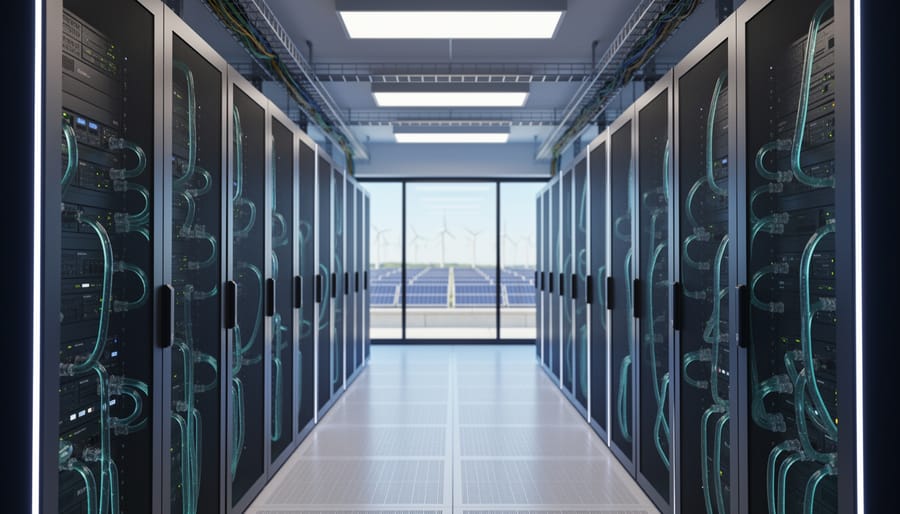
The digital gaming industry, including platforms like suprema bet br, consumes massive amounts of energy through data centers that power their 24/7 operations. These facilities require the same sustainable infrastructure innovations that modern homeowners and architects are implementing in residential projects, making this commercial sector an unexpected source of practical green building solutions.
Online casinos operate enormous server farms that generate heat comparable to small cities, demanding cooling systems that account for 40% of their total energy consumption. Forward-thinking operators are now adopting liquid cooling technologies, renewable energy integration, and waste heat recovery systems—the same strategies that can transform residential HVAC efficiency and reduce monthly utility costs by up to 35%.
The infrastructure supporting digital entertainment platforms demonstrates how large-scale sustainable practices translate directly to home construction. Casino data centers pioneering modular design approaches allow for adaptive reuse of building materials, while their implementation of intelligent energy management systems showcases real-time monitoring technologies available for residential applications. These facilities are testing grounds for innovations in thermal management, power distribution, and renewable integration that architects can specify for projects today.
Understanding how commercial gaming operations achieve carbon neutrality through infrastructure design provides homeowners with proven methodologies for reducing environmental impact. The convergence of digital commerce and sustainable building practices reveals actionable strategies that bridge commercial innovation and residential application, offering tangible solutions for anyone committed to environmentally responsible construction.
The Hidden Energy Cost of Online Casino Operations
Data Centers: The Engine Room of Digital Gaming
Behind every online casino game and player interaction lies an invisible infrastructure consuming massive amounts of energy around the clock. Data centers powering digital gaming platforms operate continuously to ensure seamless gameplay, process millions of transactions, and protect sensitive user information. These facilities house thousands of servers that generate substantial heat and require powerful cooling systems, creating a cycle of intense energy consumption.
Consider this: a typical mid-sized data center supporting online gaming operations consumes approximately 10-50 megawatts of electricity annually—enough to power 5,000 to 37,000 average homes. Large-scale operators like Evolution Gaming and Playtech run multiple facilities worldwide, with energy demands comparable to small towns. Every spin of a digital slot machine, every live dealer interaction, and every player login contributes to this aggregate consumption.
The energy breakdown reveals the scale of operations. Server computing accounts for roughly 40% of total energy use, while cooling systems consume another 38%. The remaining power supports lighting, security systems, and backup infrastructure. Network equipment constantly routes data between players and servers, processing terabytes of information daily while maintaining millisecond response times that players expect.
Real-world measurements from industry reports show that gaming servers typically operate at 70-90% capacity continuously, unlike many commercial data centers that experience usage fluctuations. This persistent demand underscores why sustainable solutions matter—not just for environmental responsibility, but for long-term operational viability as energy costs continue rising globally.
Live Casino Streaming: Bandwidth and Energy Requirements
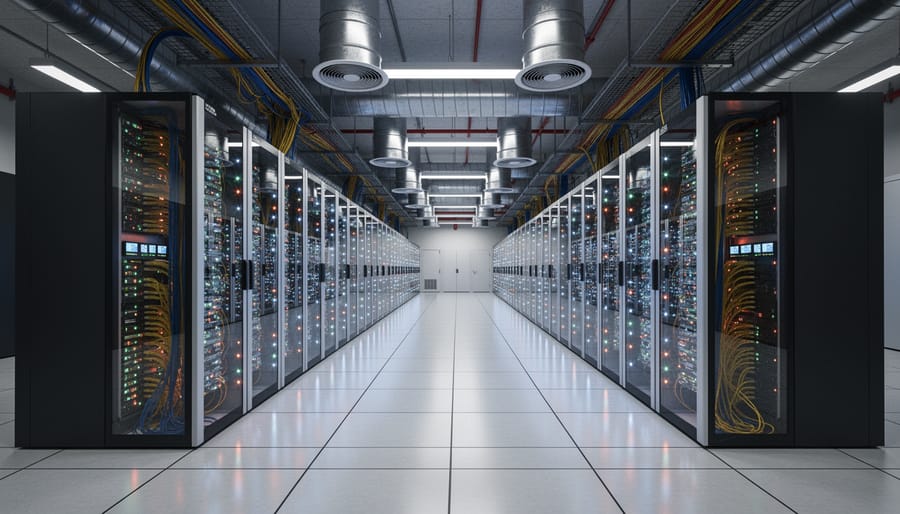
Live dealer casino streaming represents one of the most resource-intensive aspects of online gaming operations. A typical live casino studio operates multiple gaming tables simultaneously, each requiring three to five high-definition cameras to capture different angles and ensure game transparency. These feeds run continuously during operating hours, transmitting to thousands of concurrent viewers across global time zones.
The infrastructure demands are substantial. Each streaming setup requires powerful encoding servers to process raw camera feeds into multiple quality levels, allowing users with varying internet speeds to connect smoothly. Data centers supporting these operations maintain redundant systems to prevent service interruptions, with backup power supplies and cooling systems running 24/7. A single live casino studio can consume as much energy as a small office building, primarily due to constant lighting requirements, climate control for equipment and dealers, and the network infrastructure managing thousands of simultaneous connections.
Leading operators are now implementing energy-efficient LED lighting systems that reduce studio power consumption by up to 60 percent compared to traditional setups. Advanced compression algorithms minimize bandwidth requirements without sacrificing video quality, reducing both energy use and carbon footprint. These same technologies offer valuable lessons for smart home applications, where efficient video streaming and lighting automation can significantly lower residential energy consumption while maintaining functionality and comfort.
Sustainable Data Center Design for Gaming Platforms
Strategic Location Selection for Natural Cooling
Geography plays a crucial role in reducing energy consumption for casino data centers. By strategically positioning facilities in naturally cooler climates, operators can dramatically cut cooling requirements by 30-40% compared to traditional warm-weather locations. Nordic countries like Sweden, Norway, and Iceland have become preferred destinations for sustainable data infrastructure due to their consistently cool temperatures year-round.
This approach mirrors sustainable building strategies used in modern architecture, where location optimization reduces mechanical system dependency. Free-air cooling systems, also called economizers, harness outdoor air to regulate server temperatures instead of energy-intensive air conditioning units. These systems filter and direct ambient air through data halls when external temperatures fall below specific thresholds, typically 65°F or lower.
Major operators have already implemented this technology successfully. Google’s Finland facility operates almost entirely on free-air cooling, using Baltic Sea water for additional temperature control. Similarly, Facebook’s Swedish data center achieves remarkable efficiency through direct outdoor air intake during winter months. For homeowners and architects, this demonstrates how understanding microclimates and natural ventilation can significantly reduce building energy demands, translating commercial innovations into residential applications for truly sustainable design.
Renewable Energy Integration
Leading casino operators are demonstrating that large-scale entertainment platforms can successfully transition to renewable energy sources. MGM Resorts has emerged as an industry pioneer, powering 100% of its operations across 13 properties with renewable energy through a dedicated solar array in Nevada’s desert. This massive installation generates enough electricity to power 27,000 homes annually while reducing the company’s carbon footprint by 90%.
In Europe, Casino Baden-Baden integrated rooftop solar panels and geothermal heating systems, cutting energy consumption by 40% within two years. The facility’s hybrid approach combines on-site generation with renewable energy credits, offering a practical model for mixed-use entertainment venues.
Online gaming platforms are following suit with strategic data center partnerships. Several operators now utilize Iceland’s naturally cooled facilities powered entirely by geothermal and hydroelectric sources. This approach eliminates traditional cooling costs while maintaining optimal server performance.
These implementations prove that renewable integration isn’t limited to commercial enterprises. Homeowners and architects can adopt similar principles through rooftop solar installations, geothermal heat pumps, and smart energy management systems. The key lesson is scalability: sustainable infrastructure works effectively whether powering a casino complex or a residential property.
Energy-Efficient Building Materials and Design
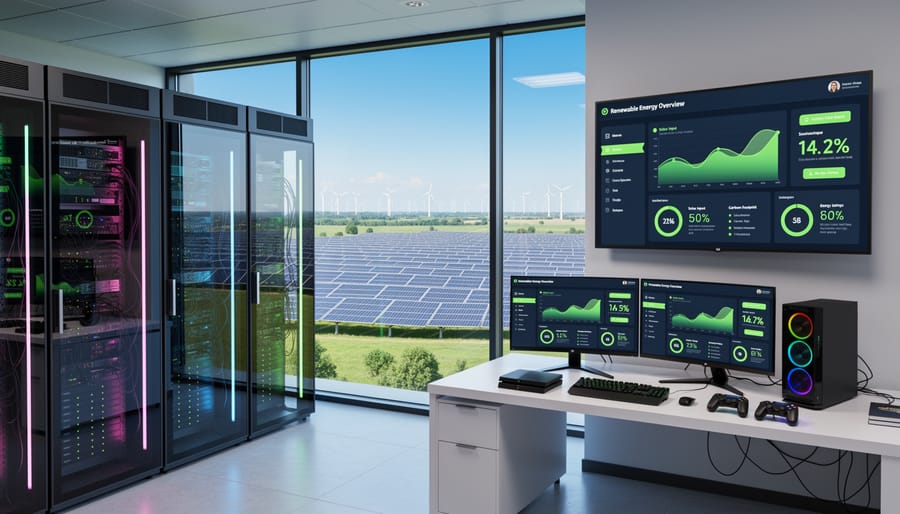
Server facilities supporting online casino operations benefit significantly from sustainable construction approaches that reduce energy consumption while maintaining optimal performance. Advanced insulation materials, such as spray foam and structural insulated panels, minimize thermal transfer and reduce cooling demands in data centers where servers generate substantial heat. These same principles apply to sustainable architecture design for residential projects seeking year-round efficiency.
Cool roofing systems using reflective coatings or light-colored materials deflect solar radiation, decreasing interior temperatures by up to 50 degrees Fahrenheit. This passive cooling strategy cuts air conditioning costs considerably while extending roof lifespan. Modular construction techniques allow server facilities to expand incrementally as demand grows, preventing overbuilding and wasted resources. Prefabricated components reduce construction waste by 20-30 percent compared to traditional methods.
Leading operators now incorporate natural ventilation systems and thermal mass materials that absorb excess heat during peak hours and release it gradually, stabilizing internal temperatures without mechanical systems. These practical solutions demonstrate how commercial infrastructure innovations translate directly into residential applications, offering homeowners proven strategies for energy-efficient building design.
Advanced Cooling Systems That Cut Energy Use in Half
Liquid Cooling vs. Traditional Air Conditioning
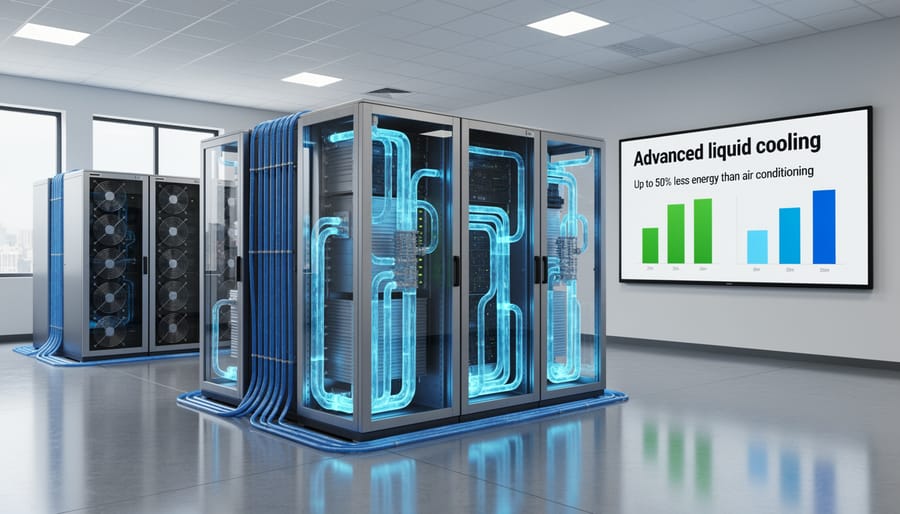
Large-scale data centers, including those powering online gaming platforms, are increasingly turning to advanced liquid cooling technologies to dramatically reduce energy consumption. Unlike traditional air conditioning systems that cool entire rooms, these innovative approaches target heat at its source.
Immersion cooling submerges computer servers directly in non-conductive liquid, typically engineered fluids that absorb heat 1,000 times more efficiently than air. This method eliminates the need for power-hungry fans and reduces cooling energy costs by up to 95% compared to conventional systems. Direct-to-chip liquid cooling, meanwhile, circulates coolant through cold plates attached directly to processors, capturing heat before it spreads into surrounding spaces.
The energy savings are substantial. A typical air-cooled data center spends 40% of its total energy budget on cooling alone. Liquid cooling systems can reduce this to just 5-10%, translating to millions in annual savings for large facilities while significantly lowering carbon footprints.
Implementation does present challenges. Initial costs run 30-50% higher than traditional systems, and specialized maintenance expertise is required. However, several European casino operators have successfully deployed hybrid systems, using liquid cooling for high-density server racks while maintaining air conditioning for less critical equipment. This practical approach allows facilities to modernize incrementally, making the technology increasingly accessible for various commercial and residential applications requiring robust thermal management.
AI-Powered Climate Management
Modern casino data centers are implementing sophisticated machine learning systems that revolutionize how facilities manage climate control. These AI-powered platforms analyze multiple data streams simultaneously, including real-time server loads, local weather conditions, and historical gaming traffic patterns to predict cooling needs with remarkable accuracy.
The system works by learning when player activity peaks—typically during evening hours and weekends—and preemptively adjusts cooling capacity before servers heat up. During low-traffic periods, the AI can reduce cooling output by up to 40%, generating substantial energy savings without compromising equipment safety. Outside temperature sensors further refine these calculations, automatically switching between mechanical cooling and free air cooling when ambient conditions allow.
What makes this approach particularly valuable for architects and homeowners is its scalability. The same predictive algorithms used in large-scale casino operations can optimize residential HVAC systems, learning household routines and weather patterns to maintain comfort while minimizing energy consumption. Some casino operators report 30-35% reductions in cooling costs after implementing these smart systems, demonstrating how intelligent climate management delivers both environmental and financial benefits.
Waste Heat Recovery Applications
European gaming operators are pioneering waste heat recovery from their data centers, transforming excess thermal energy into practical resources. Sweden’s Green Data Center initiative showcases this approach, where server heat from gaming operations warms over 20,000 residential homes through district heating networks. The process captures hot air from server cooling systems, transfers it through heat exchangers, and distributes it via insulated underground pipes to nearby neighborhoods.
Danish casino operator Danske Spil implemented a similar system at their Copenhagen facility, reducing local heating costs by 30% while cutting carbon emissions equivalent to 2,500 tons annually. Their closed-loop system maintains optimal server temperatures while simultaneously providing year-round hot water to adjacent commercial buildings. Finland’s gaming company Veikkaus takes this further by using recovered heat for greenhouse agriculture, extending growing seasons for local food production. These applications demonstrate scalable solutions that residential and commercial building designers can adapt, particularly in cooler climates where heating demands remain high throughout the year.
Software Optimization: The Overlooked Sustainability Strategy
Lightweight Game Architecture
Modern casino game developers are revolutionizing how digital entertainment operates by implementing efficient coding frameworks that dramatically reduce computational demands. This approach, known as lightweight game architecture, allows casino platforms to deliver high-quality gaming experiences while consuming significantly less energy than traditional systems.
The innovation centers on optimized code libraries and asset compression techniques. Developers now use procedural generation methods to create complex visual elements on-demand rather than storing massive graphic files. For instance, a slot machine’s spinning reels can be rendered using mathematical algorithms that require just kilobytes of code instead of megabytes of pre-rendered animations. This reduction in data processing translates directly to lower server energy consumption.
Progressive loading represents another breakthrough. Games now load essential elements first, allowing immediate gameplay while non-critical features load in the background. This distributed processing approach reduces peak power demands on data centers by up to 40 percent compared to conventional methods.
The practical application extends beyond commercial gaming. These same efficiency principles inform sustainable building automation systems, where smart home controls must balance functionality with minimal energy overhead. By prioritizing lean code architecture, both industries demonstrate that technological advancement and environmental responsibility can coexist seamlessly.
Dynamic Resource Allocation
Cloud-based infrastructure has revolutionized how online casinos manage their computing resources, offering significant environmental benefits through intelligent energy management. These systems operate on a fundamental principle: matching server capacity precisely to actual user demand in real time.
Traditional server setups typically run at full capacity around the clock, consuming substantial electricity even during overnight hours or off-peak periods when user traffic drops dramatically. Cloud-based platforms eliminate this waste by automatically scaling resources up during peak gaming hours and down during quiet periods. When fewer players are online, the system powers down unnecessary servers, reducing energy consumption by up to 60% compared to fixed infrastructure.
The technology works through sophisticated algorithms that monitor traffic patterns and predict demand spikes. For instance, if a casino typically experiences high activity on weekend evenings, the system preemptively allocates additional capacity, then seamlessly reduces it as players log off. This dynamic approach not only cuts energy costs but also minimizes the cooling requirements needed to maintain server rooms.
Major online gaming operators have reported energy savings equivalent to powering hundreds of homes annually. This same principle applies beyond entertainment venues—modern smart building systems use similar technology to optimize HVAC systems and lighting based on occupancy, demonstrating how commercial innovations translate directly into residential sustainability solutions.
Net-Zero Carbon Roadmaps for Gaming Companies
Carbon Offset Programs and Their Limitations
Many casino operators currently purchase carbon offsets to compensate for their data center emissions while developing long-term sustainability plans. This approach allows companies to claim carbon neutrality by funding renewable energy projects, reforestation initiatives, or methane capture programs elsewhere. However, carbon credits function more as a transitional tool than a permanent solution.
The primary limitation lies in accountability and verification. Not all offset programs deliver promised environmental benefits, and some projects would have occurred regardless of carbon credit funding. Additionally, offsets don’t address the root issue of energy consumption at the source. Industry experts increasingly view carbon credits as a stepping stone toward implementing genuine net-zero carbon strategies.
Progressive casino operators are now coupling offset purchases with concrete infrastructure improvements: transitioning to renewable energy contracts, upgrading to energy-efficient servers, and implementing advanced cooling systems. This dual approach acknowledges current operational realities while investing in measurable, lasting environmental improvements that homeowners and commercial builders can adapt for their own projects.
Industry Certifications and Standards
Leading gaming platforms are increasingly adopting recognized environmental certifications to validate their sustainability commitments. LEED (Leadership in Energy and Environmental Design) certification, traditionally associated with physical buildings, now extends to data centers that power online gaming operations. This certification evaluates factors like energy efficiency, water usage, and sustainable site development. For example, several European gaming companies have achieved LEED Gold status for their server facilities by implementing advanced cooling systems and renewable energy sources.
ISO 50001, the international standard for energy management systems, provides another framework gaming operators use to systematically reduce energy consumption. This certification requires organizations to establish baseline energy metrics, set improvement targets, and continuously monitor performance. Casino platforms adopting ISO 50001 typically report 10-20% energy reductions within the first two years. These same certification principles apply to residential projects, where homeowners can use similar monitoring systems to track household energy usage and identify efficiency opportunities, making sustainable infrastructure practices accessible beyond commercial applications.
What Homeowners Can Learn From Casino Infrastructure Innovation
Home Server and Smart Home Energy Management
The same principles that make casino data centers energy-efficient can transform how we manage always-on technology at home. Modern households often run 24/7 systems including home servers, security cameras, Wi-Fi networks, and entertainment hubs that collectively consume significant power. By implementing smart home energy management strategies inspired by commercial operations, homeowners can reduce energy waste substantially.
Start by consolidating devices onto efficient hardware. A single low-power home server running multiple services uses less energy than several separate devices. Modern mini-PCs consume as little as 6-15 watts while handling media streaming, file storage, and home automation. Smart power strips with monitoring capabilities help identify vampire loads, automatically cutting power to idle devices. Temperature-based fan controls and strategic placement in naturally cool areas reduce cooling needs. Real-world applications show households cutting always-on electricity consumption by 40-60% through strategic upgrades, translating to measurable monthly savings while supporting broader environmental goals.
Scalable Cooling Solutions for Home Tech
Casino data centers have pioneered cooling innovations that translate perfectly into home environments. Modern gaming setups, home offices, and personal server rooms can benefit from techniques like hot aisle/cold aisle configurations and liquid cooling systems, scaled down for residential use. These approaches reduce energy consumption by 30-40% compared to traditional air conditioning methods.
Homeowners can implement zoned cooling strategies borrowed from commercial facilities, directing cooled air specifically to heat-generating equipment rather than cooling entire rooms. Compact heat exchangers and smart thermostats work together to maintain optimal temperatures while minimizing waste. Many of these solutions integrate seamlessly with energy-efficient building design principles, creating synergy between passive and active cooling systems.
For dedicated gaming rooms or home tech spaces, consider installing raised flooring systems that facilitate natural air circulation, or investing in modular cooling units that adjust output based on real-time heat loads. These adaptations prove that commercial-grade sustainability innovations can enhance comfort and reduce energy bills in residential settings.
The intersection of digital entertainment infrastructure and sustainable building practices reveals a powerful lesson: environmental responsibility and technological innovation work hand-in-hand rather than in opposition. The casino industry’s transition to green data centers, renewable energy integration, and advanced cooling systems demonstrates that even the most energy-intensive digital operations can significantly reduce their carbon footprint through thoughtful design and strategic implementation.
What makes this evolution particularly relevant for homeowners and architects is the scalability of these solutions. The same principles that guide sustainable casino infrastructure—efficient cooling systems, modular design, renewable energy integration, and smart power management—translate directly to residential and commercial projects of any size. A homeowner installing solar panels with battery backup follows the same logic as a casino operator implementing renewable energy systems; both prioritize long-term sustainability over short-term costs.
Looking forward, the continued convergence of digital technology and environmental stewardship will define the next generation of infrastructure development. As data centers become more efficient and renewable energy more accessible, the practices pioneered by forward-thinking gaming operators will become standard across industries. For architects and builders, this represents an opportunity to lead rather than follow, incorporating proven sustainable technologies into every project. The future of construction lies not in choosing between innovation and responsibility, but in recognizing they’re inseparable components of truly modern design.